English| EUR
Suggested for you
More currencies
Choose a language
Bangkok's Chinatown centers on Yaowarat Road, a district where Thai and Chinese culinary traditions have merged over seven generations. This guide identifies the twelve dishes that define the area, from charcoal-grilled seafood to century-old noodle recipes, and explains what makes each one worth ordering.
Quick answer
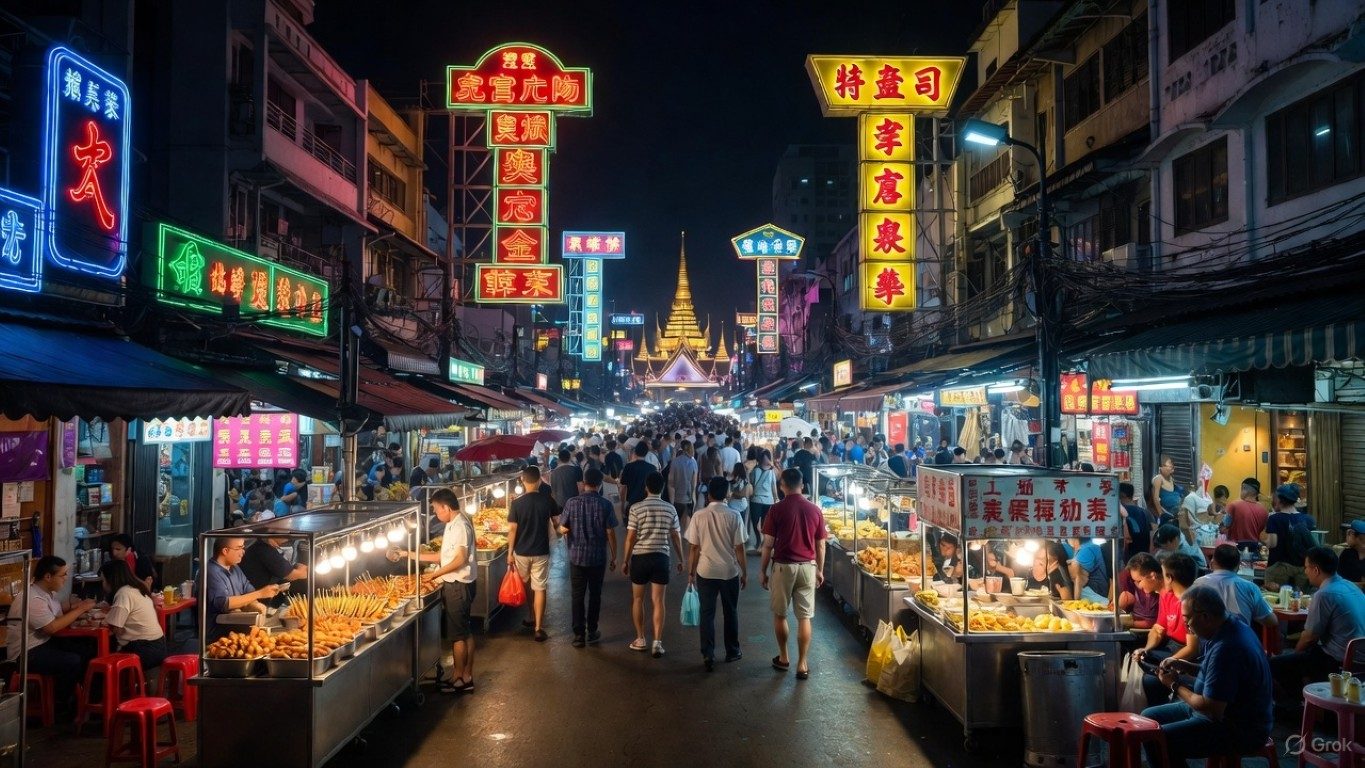
The essential dishes to eat in Chinatown Bangkok include guay jub (rolled rice noodle soup), pla pao (salt-crusted grilled fish), khao moo daeng (red pork over rice), and pu pad pong karee (crab curry). Most vendors operate between 18:00 and 23:00, when Yaowarat Road closes to traffic and the night market reaches full activity. The district runs 24 hours, but evening arrivals encounter the widest selection and the most active cooking stations.
Yaowarat Road operates as both a commercial thoroughfare and an open-air dining district, with over two hundred food vendors concentrated in a one-kilometer stretch. The culinary identity of what to eat in Chinatown Bangkok emerged in the late 19th century when Teochew immigrants settled along the canal and adapted Cantonese techniques to Thai ingredients—tamarind replaced black vinegar, palm sugar softened soy-based marinades, and fish sauce became the default salt. The district's signature dishes fall into three categories: charcoal-grilled seafood sold from pushcarts, one-plate rice and noodle dishes served at shophouse counters, and desserts prepared in shallow woks over gas flames. Guay jub—rolled rice noodles in peppery pork broth—appears on nearly every corner, but vendors distinguish themselves through broth clarity and the ratio of offal to tender pork. Pla pao, whole fish encased in salt and grilled until the skin blisters, is ordered by weight and served with a lime-chili dipping sauce that cuts through the char. Khao moo daeng, red pork over jasmine rice with a sweet soy glaze, represents the Thai-Chinese comfort food tradition and is available at any hour. Crab curry, locally called pu pad pong karee, originated at a Yaowarat shophouse in the 1950s and remains the most photographed dish in the district. The sauce—a loose emulsion of curry powder, egg, coconut milk, and crab fat—requires constant stirring and high heat, so it rarely travels beyond the few restaurants that built reputations on it. Oyster omelette, another Teochew staple, arrives as a crisp-edged pancake with a custard-soft center, the batter made from tapioca starch that turns translucent when fried. Bangkok Chinatown food specialties also include kai palo, a five-spice braised egg and pork belly dish sold in clay pots, and ba mee moo daeng, springy egg noodles topped with barbecue pork and wonton. Dessert vendors cluster near the Odeon Circle intersection, serving tub tim grob (water chestnut in coconut milk), khanom buang (crispy coconut crepes), and mango sticky rice during the March-to-June season. The food culture here operates on a produce-to-plate cycle measured in hours rather than days—whole fish are selected live from aerated tanks, noodles are hand-cut in the morning, and curries are prepared in small batches that sell out before midnight.
“The culinary identity of the district emerged when Teochew immigrants adapted Cantonese techniques to Thai ingredients, replacing black vinegar with tamarind and sweetening soy marinades with palm sugar.”
The best arrival window is 18:00–23:00, when street food activity reaches its peak and the night market atmosphere is most vibrant. Planning your visit during this period ensures access to the widest selection of active vendors.
—
Most stalls are closed; visit during this time only for non-food photography or quieter exploration of the district.
30–35°C, high humidity
Vendors begin setting up their carts and preparing ingredients as the street transitions toward the night market rush.
27–30°C, cooler night air
This is the primary operational window for street food; expect high foot traffic as the area reaches its peak density.
26–28°C, comfortable
Crowds begin to thin as vendors close their stations, though some late-night options remain available for those avoiding the peak rush.
Verdict: The best time to visit for the full street food experience is during the evening window of 18:00–23:00 on weekdays to avoid the most intense weekend crowds.
Yaowarat Road operates daily, providing access to street food stalls throughout the week.
Chinatown is centered along Yaowarat Road, Samphanthawong, Bangkok 10100, Thailand. The most efficient way to access the area is via the underground rail network.
MRT Blue Line to Wat Mangkon Station
Direct to Yaowarat Road
Routes 1, 4, 7, 8, 25, 40 to Chinatown
For the best experience, take the MRT Blue Line to Wat Mangkon Station and walk to the main street. Aim for the best arrival window of 18:00–23:00 to coincide with peak street food activity.
Everything you need to know about what to eat in chinatown bangkok
For a first visit, focus on iconic dishes such as rolled rice noodles in peppery broth, toasted bread with pandan custard, and fresh oyster omelets. Exploring what to eat in chinatown bangkok reveals a diverse mix of Thai-Chinese culinary heritage that defines the local palate.
The best arrival window is 18:00–23:00 when the area transforms into a vibrant night market with peak street food activity. This is when most vendors are fully operational, offering the most authentic atmosphere for your dining experience.
There is no cost to access the area as it is an open public street, with an entrance fee of 0 THB. You only pay for the specific items you choose to purchase from individual stalls.
The district is located at Yaowarat Road, Samphanthawong, Bangkok 10100, Thailand, and is accessible via taxi or the nearby MRT Wat Mangkon station. Navigating this historic quarter allows you to discover hidden gems while deciding what to eat in chinatown bangkok.
A guided walking experience provides deeper context into the history and ingredients of the food, often helping you navigate crowded stalls more efficiently. Professional guides can provide curated tastings that showcase the best flavors in the district.
Yes, many vendors offer meat-free versions of classic dishes, and during certain festivals, the area becomes a hub for plant-based offerings. Look for the yellow and red 'jay' signs that indicate vegan or vegetarian-friendly options.
A common mistake is arriving too early in the day when many of the most popular night stalls are not yet set up. Planning your visit for the evening ensures you see the full range of vendors and can enjoy the cooler night air.
The area is officially accessible 24 hours a day, seven days a week, as it is a public thoroughfare. While vendors set their own hours, you will find consistent activity from Monday through Sunday.
Chinatown Night Food Tours
Read more GuideChinatown Bangkok Opening Hours
Read more Tickets & toursChinatown Walking Food Tours
Read more Tickets & toursChinatown Street Food Tours
Read more GuideIs Chinatown Bangkok Worth Visiting?
Read more GuideWhat to Do in Chinatown Bangkok
Read more Tickets & toursChinatown Michelin Food Tours
Read more