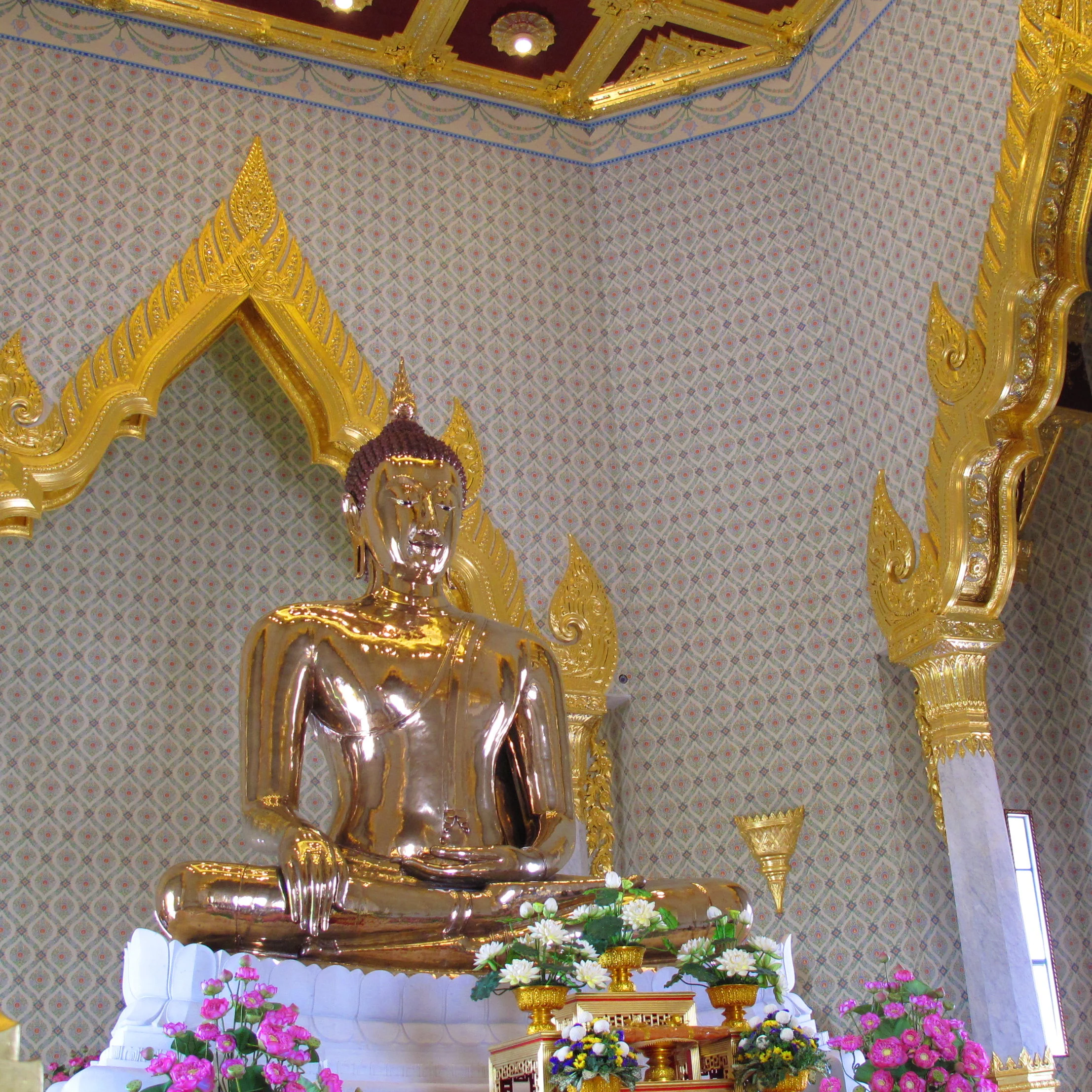
Wat Traimit
Home to the world's largest solid gold Buddha statue, this temple sits at the edge of the Chinatown district. The upper floor houses the Phra Phuttha Maha Suwana Patimakon.
Visit early in the day to view the statue before crowds arrive.

Bangkok's Chinatown unfolds along Yaowarat Road as a district of temples, market lanes, gold shops and noodle stalls that operates around the clock. This guide maps the experiences that define the quarter, from dawn temple visits to late-night street food rounds, and explains how to move between them.
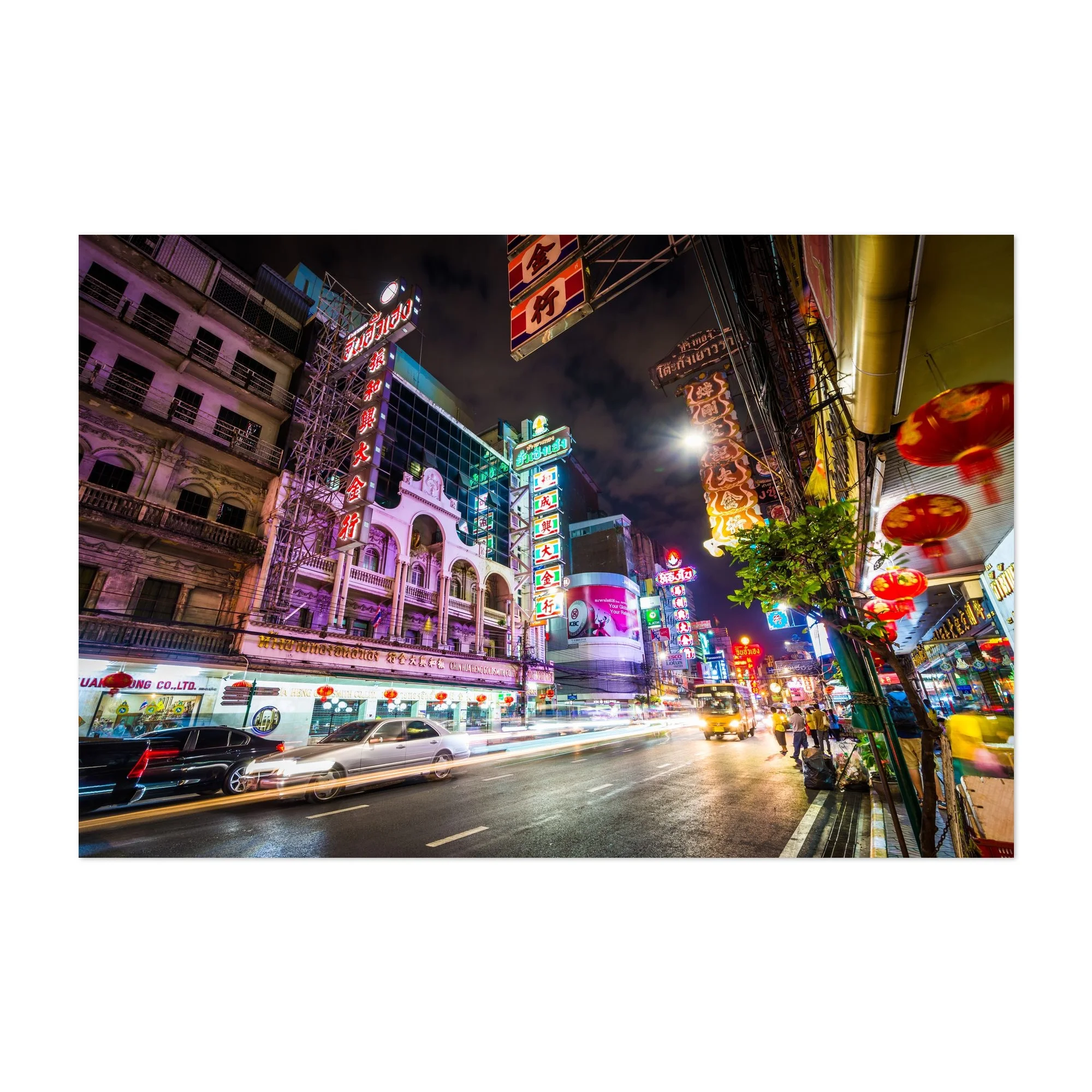
Quick answer
Chinatown Bangkok offers temple visits at Wat Traimit and Wat Mangkon Kamalawat, street food tasting along Yaowarat Road and its soi, gold shop browsing in the jewelry district, and market exploration at Sampeng Lane and Talad Kao. The district is free to enter and accessible 24 hours, though the peak evening window from 17:00 to midnight delivers the full neon-lit atmosphere and active food vendors.
Yaowarat Road was surveyed in 1891 as Bangkok's Chinese commercial spine, and the district that grew around it remains the city's densest concentration of gold traders, herbal medicine vendors and Teochew-dialect shophouses. What distinguishes Chinatown from Bangkok's other heritage quarters is its refusal to freeze into a museum district—the same families that opened shopfronts in the early 20th century still operate them, and the streetscape remains a working commercial ecosystem rather than a restored attraction. Three temple complexes anchor the district's spiritual geography. Wat Traimit houses a five-and-a-half-ton solid gold Buddha image discovered in 1955 when a plaster exterior cracked during relocation. Wat Mangkon Kamalawat, the largest Chinese Buddhist temple in Bangkok, fills with worshippers during Lunar New Year and Vegetarian Festival. Wat Chakrawat, tucked behind Charoen Krung Road, keeps a small population of crocodiles in a courtyard pond—a holdover from a 19th-century flood that left the reptiles stranded in temple grounds. Visiting all three requires roughly two hours of walking through the neighborhood's parallel soi system. Sampeng Lane, a covered market corridor one block south of Yaowarat, compresses wholesale fabric vendors, Buddhist amulet stalls and household goods into a 1.5-kilometer passage barely wide enough for two people to pass. Talad Kao, the old market zone near Odeon Circle, trades in dried seafood, ceramics and cooking equipment used by Bangkok's restaurant supply chain. Both function as working wholesale districts rather than tourist bazaars, and prices reflect that. The street food economy activates after 17:00 when vendors roll carts onto Yaowarat Road's sidewalks and close the westbound lane to traffic. Signature dishes include guay jub—rolled rice noodles in peppery pork broth—charcoal-grilled satay, oyster omelets and mango sticky rice served from stalls that have occupied the same corner for multiple generations. The neon signage that defines Chinatown's night aesthetic is a product of the 1960s and 1970s, when Thai-Chinese businesses commissioned vertical Chinese-script signs to compete for visibility along the crowded roadway. The gold shop district along the southern stretch of Yaowarat Road operates as both retail and financial instrument—Thai-Chinese families traditionally hold wealth in 96.5-percent-purity gold ornaments that can be liquidated or traded. Window displays show current gram prices on LED boards, and shops weigh purchases to the fourth decimal. Browsing requires no purchase commitment, and the district offers a functional view of how Bangkok's Chinese community manages intergenerational assets outside the banking system.
“The same families that opened shopfronts in the early 20th century still operate them, and the streetscape remains a working commercial ecosystem rather than a restored attraction.”
The best arrival window for Chinatown Bangkok is 17:00–23:59, when the Yaowarat Road street food scene reaches its peak operation and the neon signs illuminate the district. This timeframe offers the full sensory experience of the area's vibrant evening environment.
Cool and dry, 25°C to 30°C
This period offers the most comfortable weather for exploring the streets on foot.
Hot and humid, 30°C to 35°C
High temperatures make evening visits during the cooler night hours preferable.
Frequent rain, 25°C to 32°C
Occasional rain showers may occur, so carry an umbrella for evening walks.
Warm, 25°C to 32°C
The district becomes extremely busy with parades and festivities during this annual celebration.
Verdict: The most effective time to experience the area is between 17:00–23:59, ideally during the cooler months of November through February.
Chinatown offers a dense concentration of street food stalls and historic eateries primarily located along Yaowarat Road. Exploring the side alleys reveals traditional shophouse restaurants that provide a quieter experience compared to the bustling main thoroughfare.
street
The main artery of Chinatown where numerous vendors serve grilled seafood, noodle soups, and skewered meats.
street
Located in front of the Old Chinatown Cinema, this stall is known for its peppery rolled rice noodle soup.
restaurant
A prominent shophouse restaurant on Yaowarat Road specializing in charcoal-grilled prawns and Thai-Chinese seafood dishes.
restaurant
Situated on a side street off Yaowarat, this establishment serves signature rolled noodles and crispy pork belly.
street
A popular stall serving traditional rice noodle rolls in a thick broth, often found near the central Chinatown intersections.
Chinatown serves as a hub of architectural and cultural landmarks, ranging from historic temples to dense market corridors. Exploring these sites offers insight into the district's religious heritage and vibrant street life.
Home to the world's largest solid gold Buddha statue, this temple sits at the edge of the Chinatown district. The upper floor houses the Phra Phuttha Maha Suwana Patimakon.
Visit early in the day to view the statue before crowds arrive.
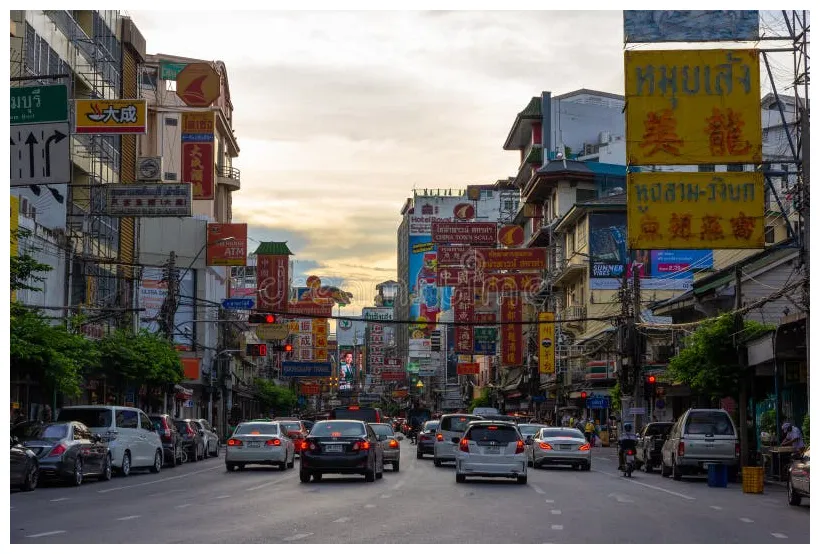
This main artery functions as the central spine of Chinatown, characterized by dense rows of shops and neon signage. It serves as the primary route for navigating the district's various markets.
Walk from the Chinatown Gate toward the center to observe evening activity.
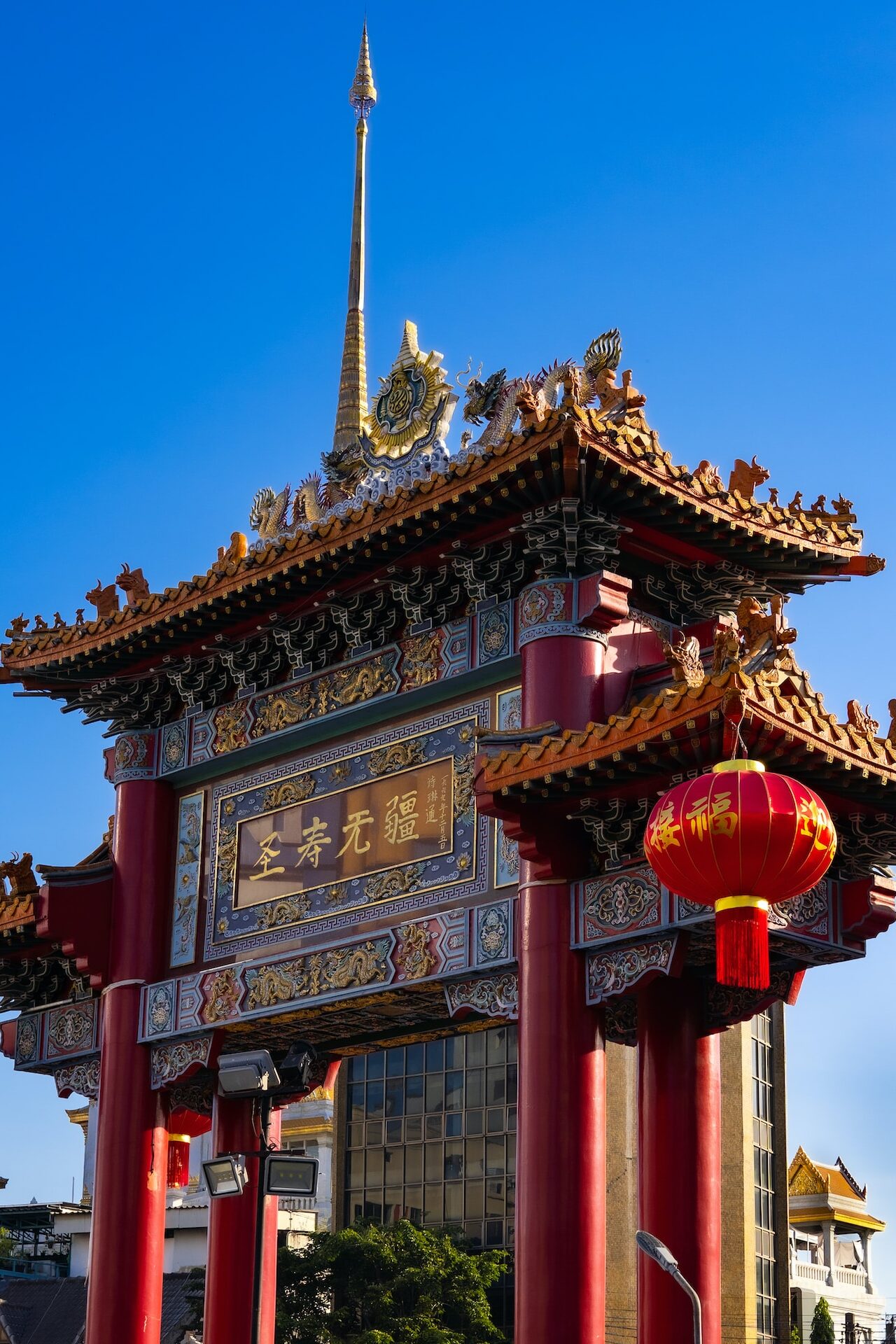
Standing as a prominent landmark at the Odeon Circle, this ceremonial gate marks the western entrance to the district. Its traditional Chinese architectural style provides a visual boundary for the area.
Photograph the gate at dusk when the surrounding area begins to glow.
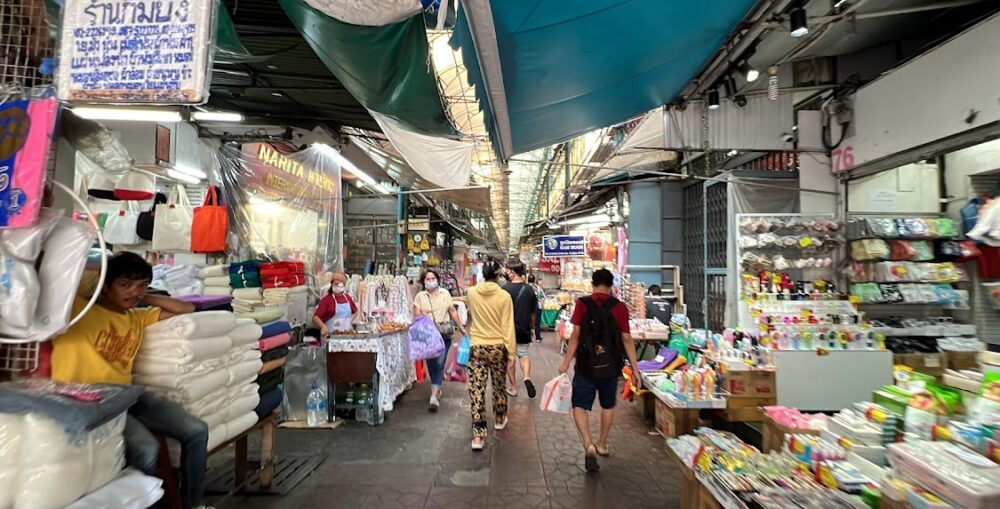
This narrow alleyway consists of a dense network of stalls selling textiles, household goods, and local products. It represents one of the oldest and busiest trading zones in the neighborhood.
Navigate the side alleys during daylight hours to find hidden shops.
Chinatown centers on Yaowarat Road in the Samphanthawong district. The most efficient way to access the area is via the underground rail network.
MRT Blue Line to Wat Mangkon Station
Chao Phraya Express Boat to Ratchawong Pier
Direct to Yaowarat Road
Exit Wat Mangkon Station via Exit 1 to reach Yaowarat Road within a five-minute walk. Arriving during the 17:00–23:59 window provides direct access to the street food activity.
Chinatown Bangkok is accessible throughout the week, as the district remains open 00:00–23:59 daily. Please note that individual shops, markets, and culinary experiences operate within their own specific schedules inside these hours.
Access to the Chinatown district itself is free of charge. Any admission costs incurred are specific to individual temples or cultural attractions located within the area.
Verdict: A typical visitor pays 0 THB to explore the district, with total costs depending on the number of specific temples or cultural sites they choose to enter.
Everything you need to know about what to do in chinatown bangkok
Visitors often prefer walking through the narrow alleyways to fully experience the vibrant atmosphere and local culture. Guided walks provide context to the historical significance of the area while helping you navigate the bustling environment. Using a curated Bangkok landmark itinerary ensures you hit the main spots without missing hidden gems.
The district is a public area and therefore has an entrance fee of 0 THB. Please note that individual temples, museums, or specific attractions within the neighborhood may implement their own entry charges.
The area truly comes alive when the sun sets, making it the perfect time to experience the authentic culinary scene. You should prioritize walking along Yaowarat Road to see the neon signs and sample various dishes from the busy street food stalls.
The best arrival window is 17:00–23:59 to enjoy the peak evening atmosphere. During these hours, the street food vendors are fully operational and the district is at its most vibrant.
A guided Chinatown food tour is a highly effective way to discover local delicacies you might otherwise overlook. These experiences are designed to introduce you to regional specialties while providing insights into the culinary traditions of the community.
Families can enjoy the colorful markets, ornate shrines, and the sensory experience of the busy streets. Planning your visit during the late afternoon allows you to navigate the area before the peak nighttime crowds become too dense.
Yes, the district is open daily from 00:00–23:59, including weekdays. Whether you visit on a Monday or a Saturday, the streets remain accessible for exploration.
Chinatown Night Food Tours
Read more GuideChinatown Bangkok Opening Hours
Read more Tickets & toursChinatown Walking Food Tours
Read more Tickets & toursChinatown Street Food Tours
Read more GuideIs Chinatown Bangkok Worth Visiting?
Read more Tickets & toursChinatown Michelin Food Tours
Read more GuideWhat to Eat in Chinatown Bangkok
Read more