3 hr
Chinatown Street Food Walking Tour
Sample 10+ authentic Thai dishes guided by a local expert through Bangkok's historic food district
Reserve
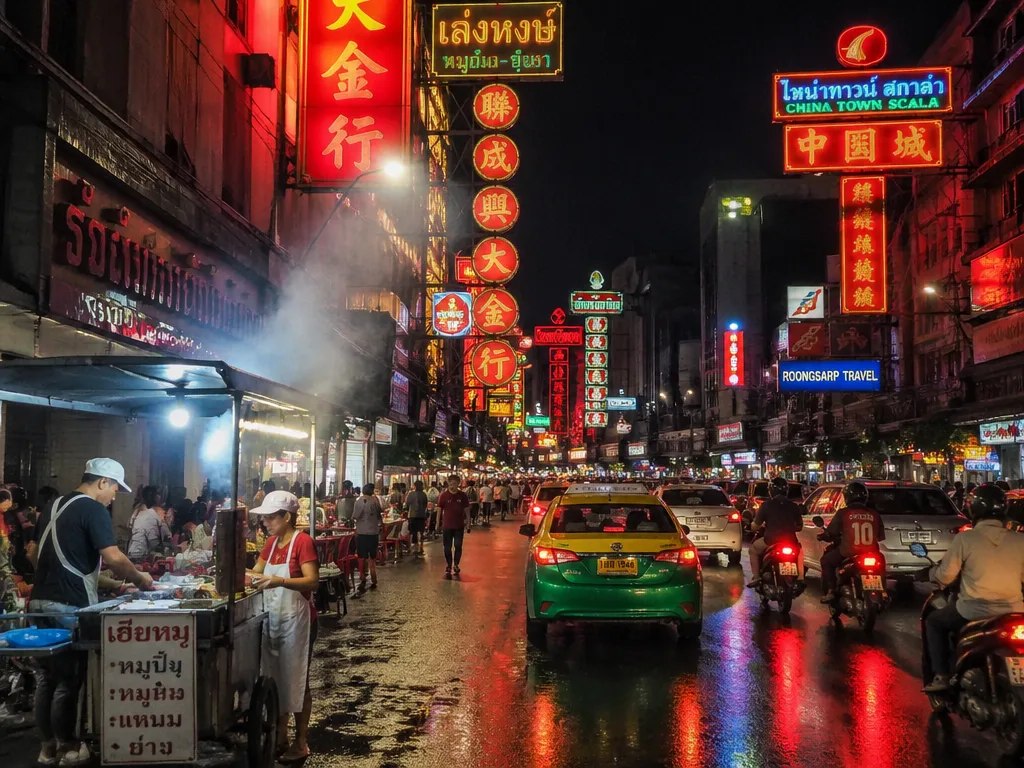
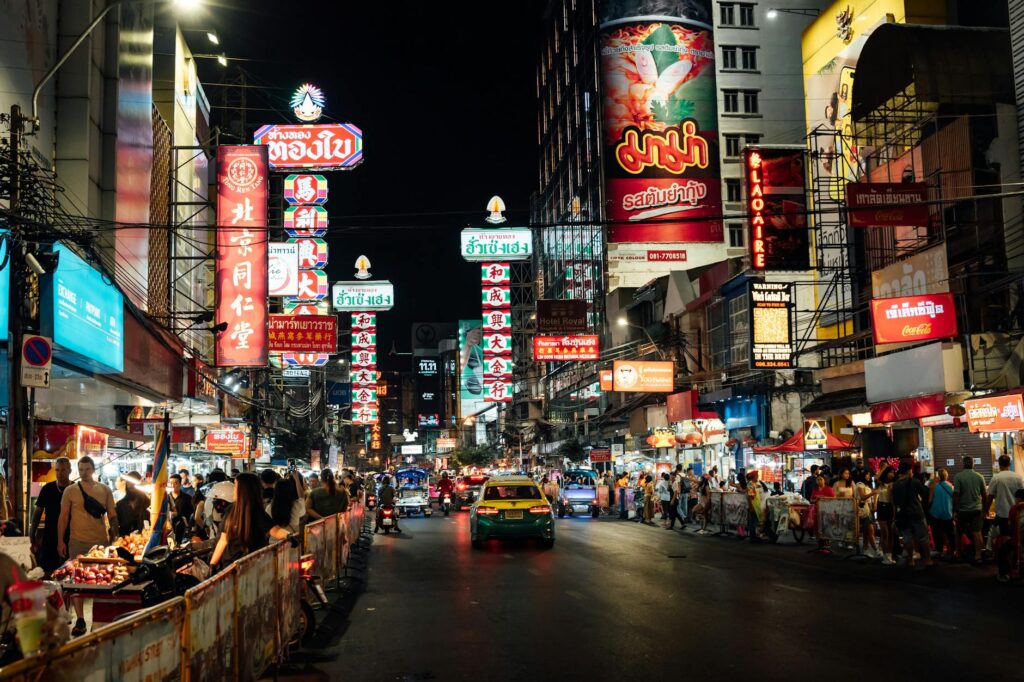
Neon-lit alleys and century-old recipes, charcoal woks firing until midnight
Hand-picked by our editors — only the best 8 food experiences from 34 reviewed
Verified partners for Bangkok Chinatown Food tours, free cancellation where available, and instant confirmation on every booking.
3 hr
Sample 10+ authentic Thai dishes guided by a local expert through Bangkok's historic food district
Reserve
4 hr
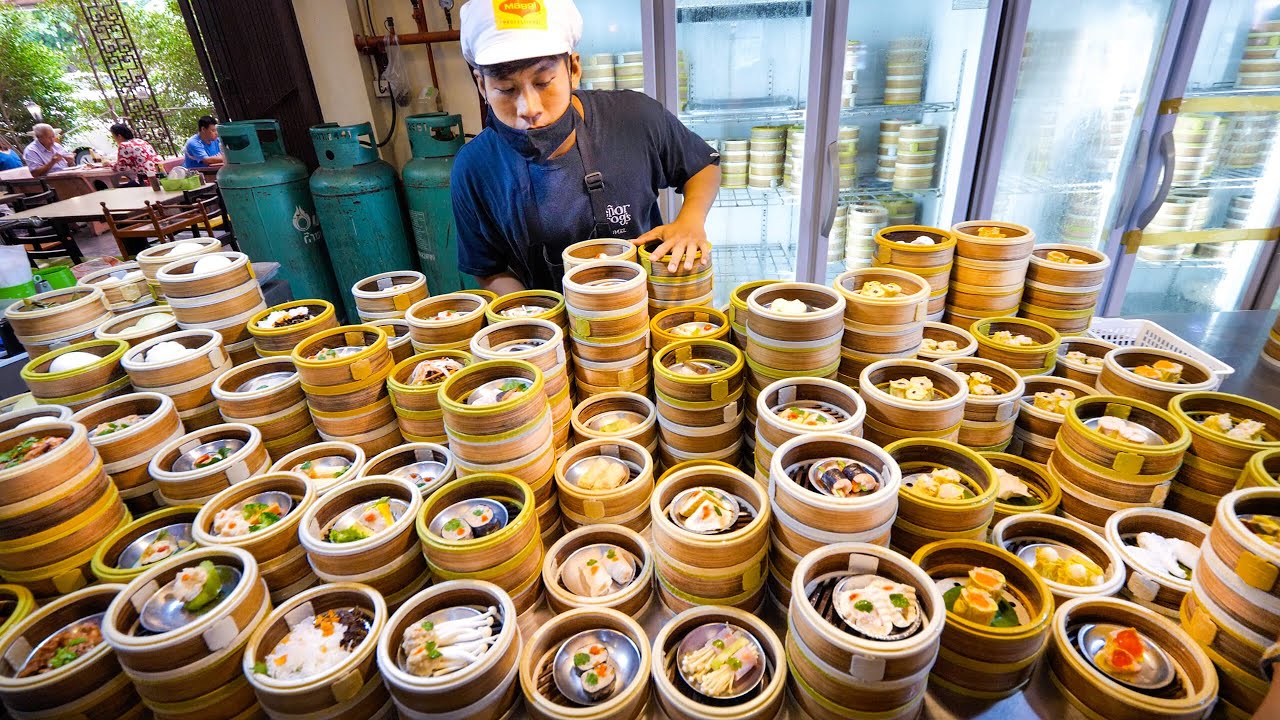
Journey through hidden alleyways of historic Yaowarat on an intimate culinary adventure with expert guides
Reserve
4 hr
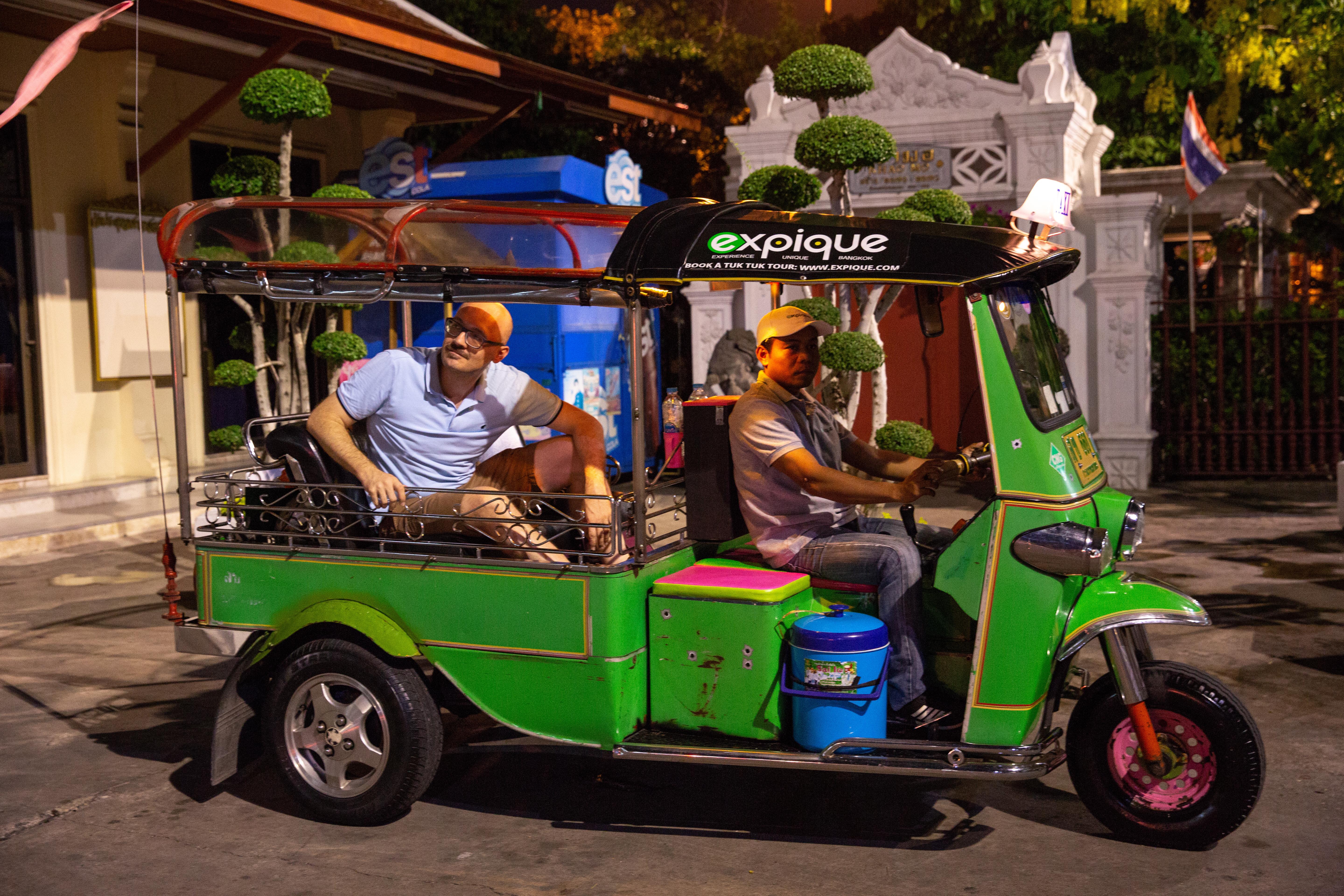
Explore Bangkok's after-dark culinary scene aboard a tuk-tuk, sampling northeastern Thai flavors and hidden gems.
ReservePrices from verified partners. Availability updates in real time at checkout. Free cancellation policies apply where shown.
The landmarks, rooms, and views travelers on Bangkok Chinatown Food tours remember — all visible on a single visit.
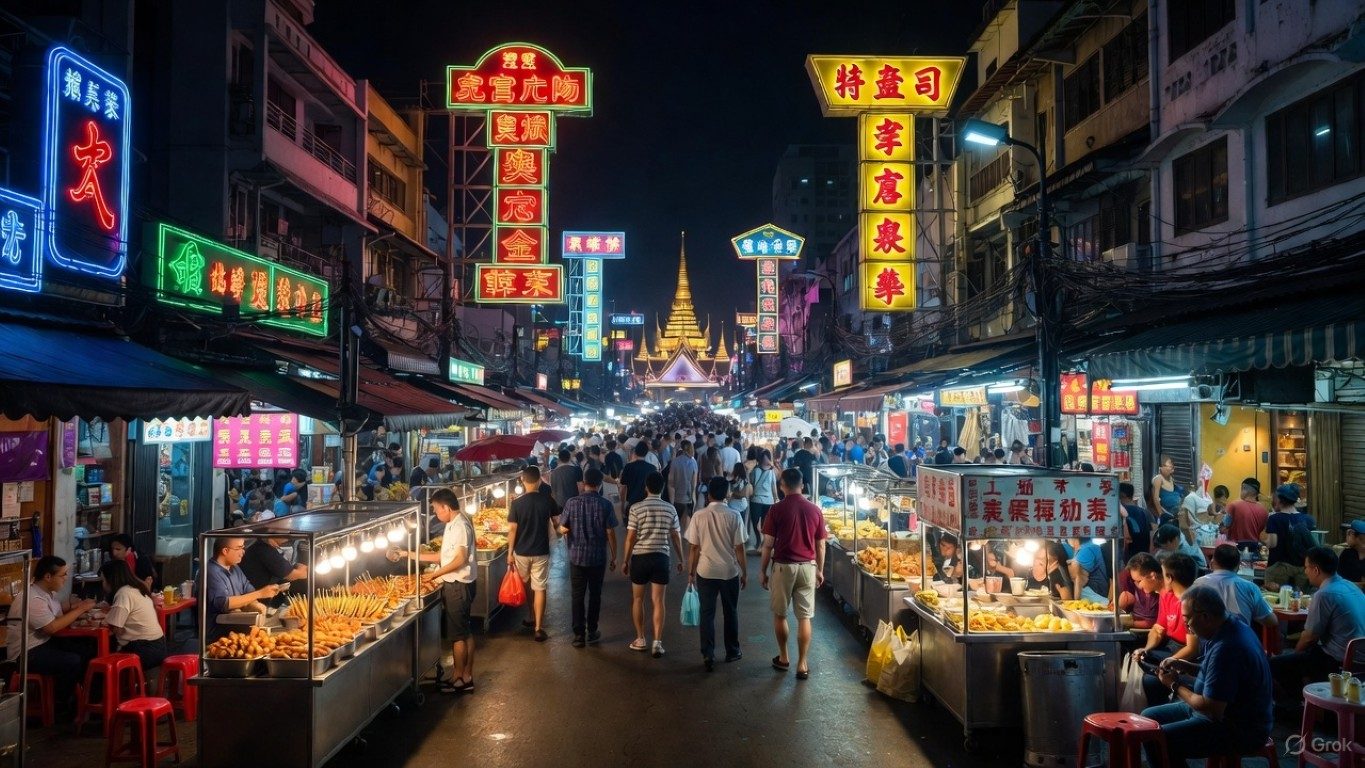
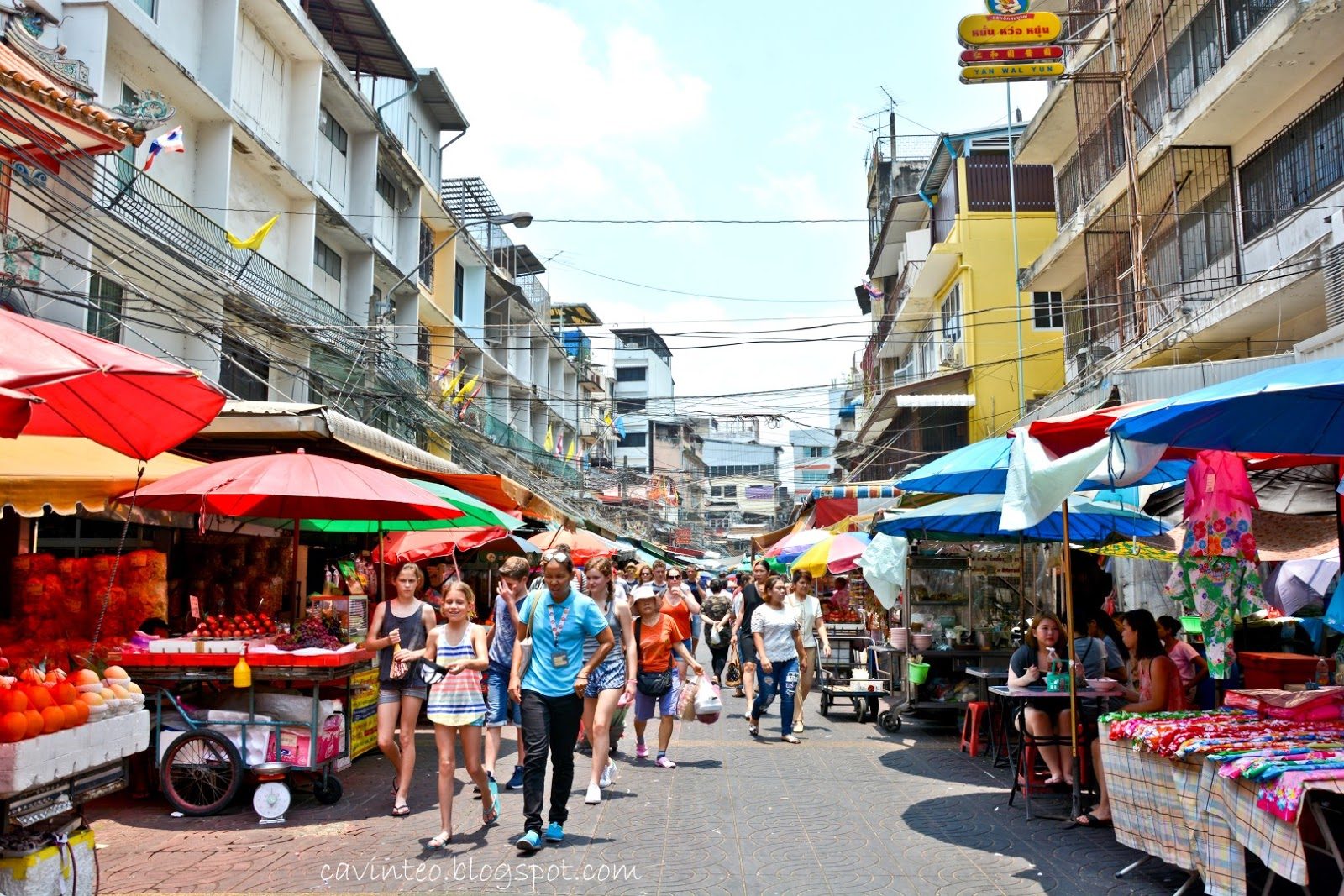
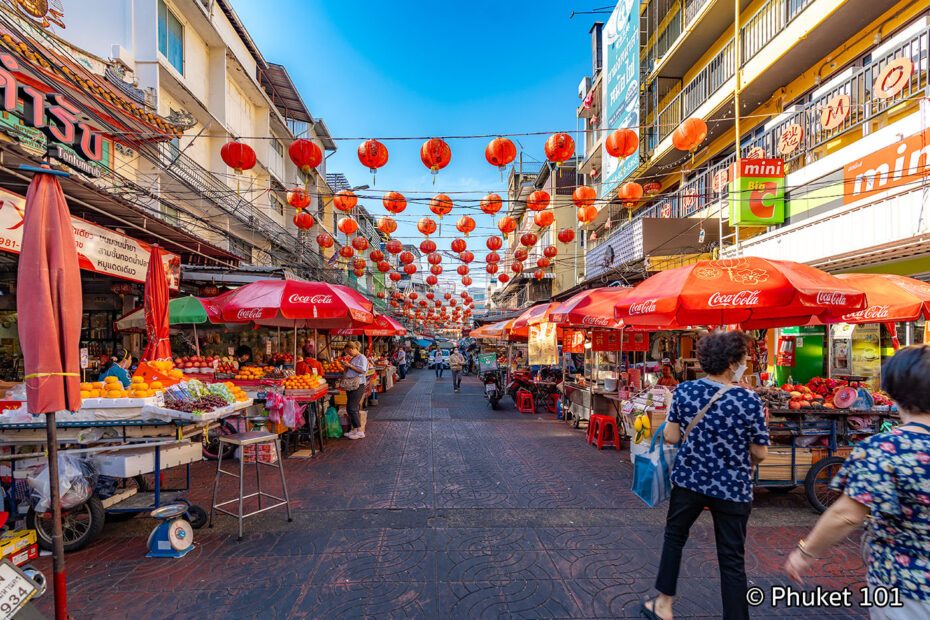
The heart of the district features hundreds of vendors serving traditional dishes like bird's nest soup. Most stalls have operated for over 40 years.
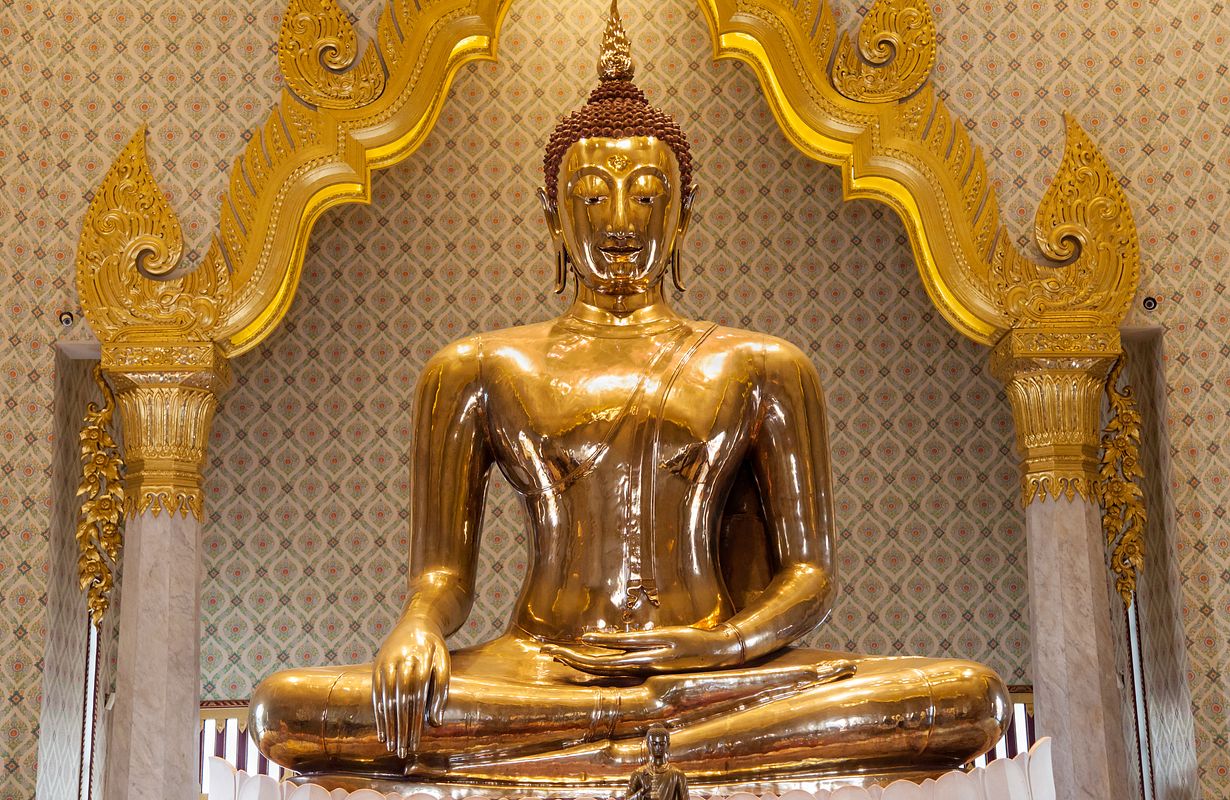
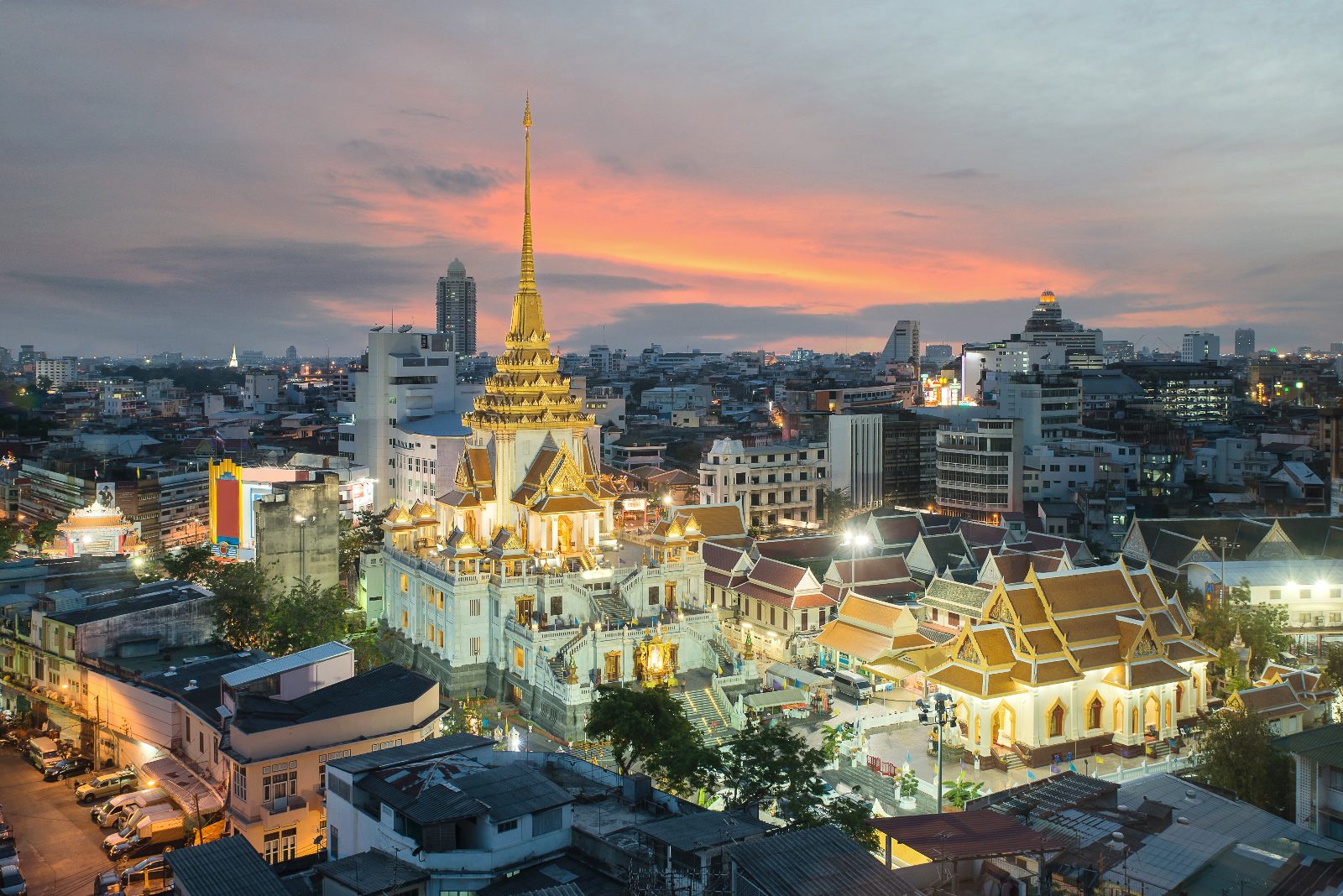
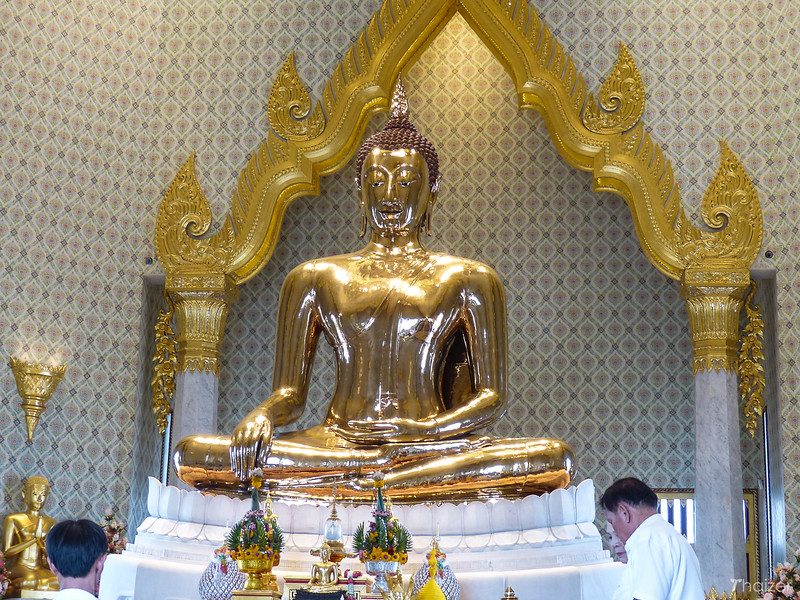
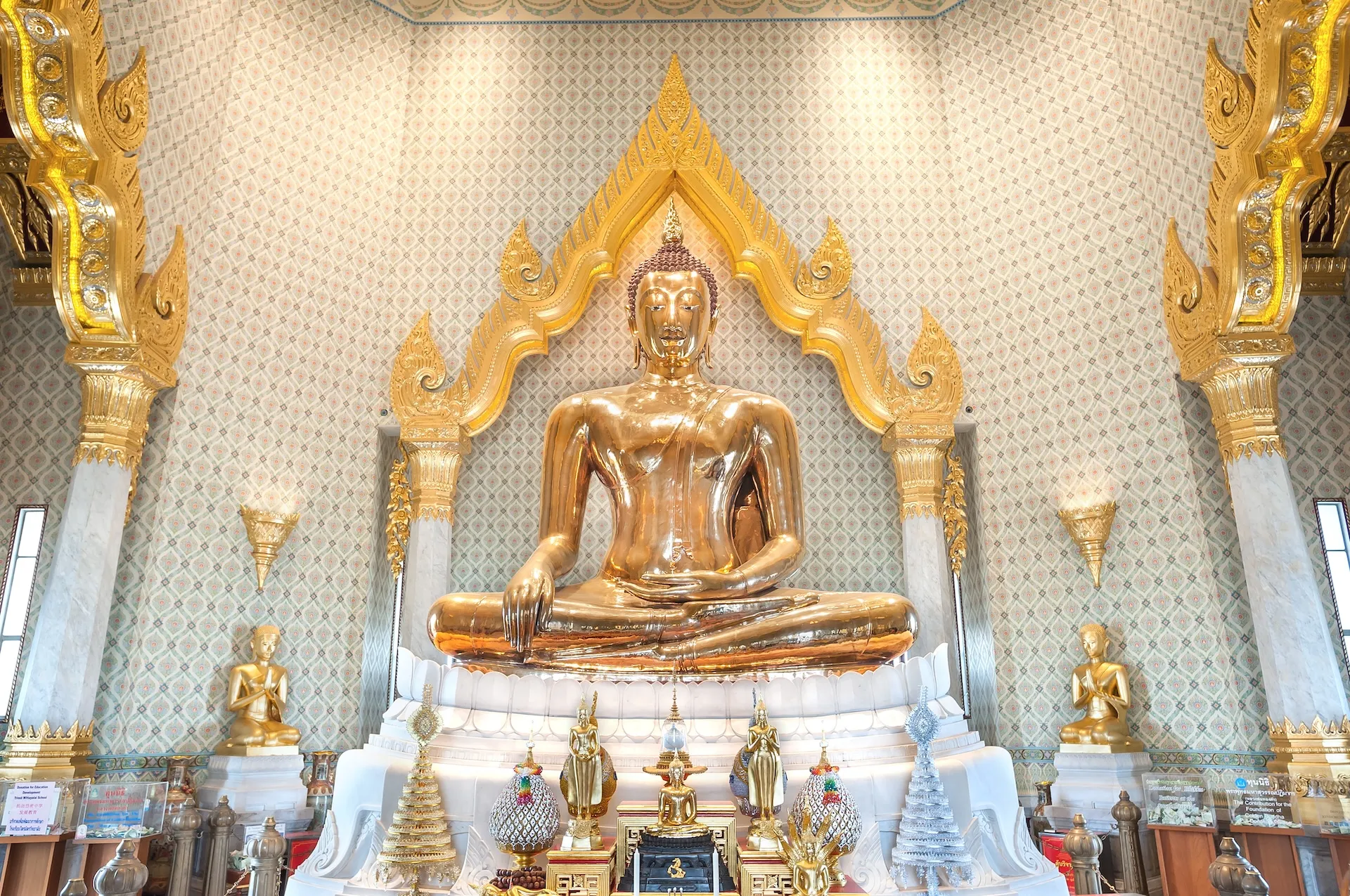
This landmark houses a massive 5.5-ton solid gold statue. It is a stunning example of Sukhothai-era artistry.
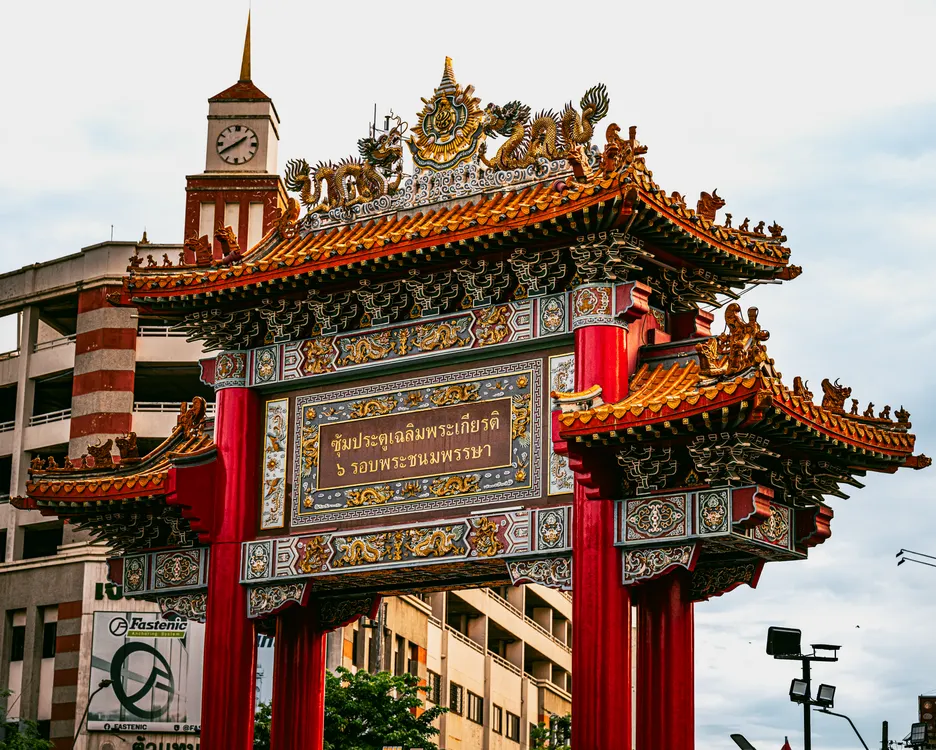
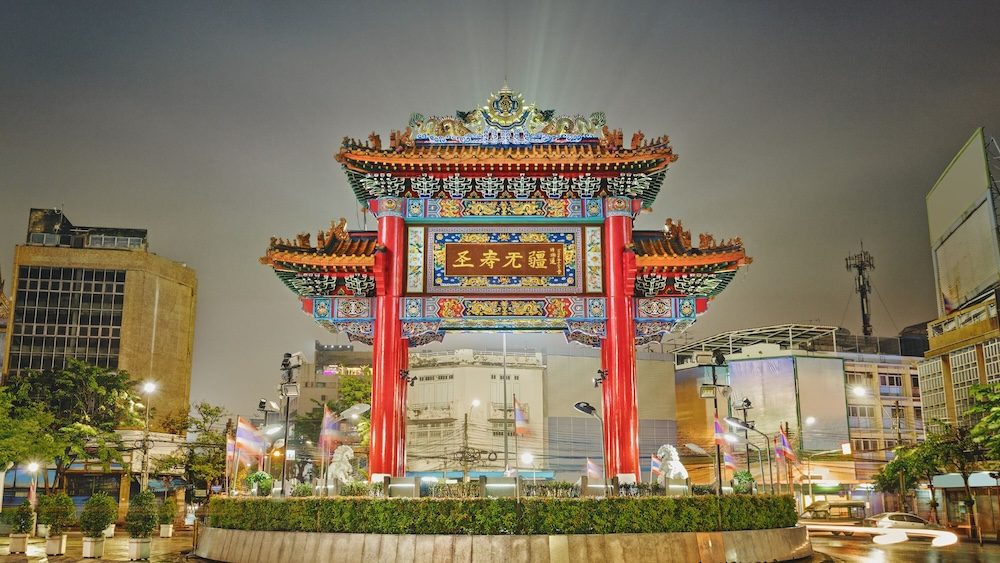
This ceremonial archway marks the formal entrance to the district. It serves as a popular photography spot for visitors.
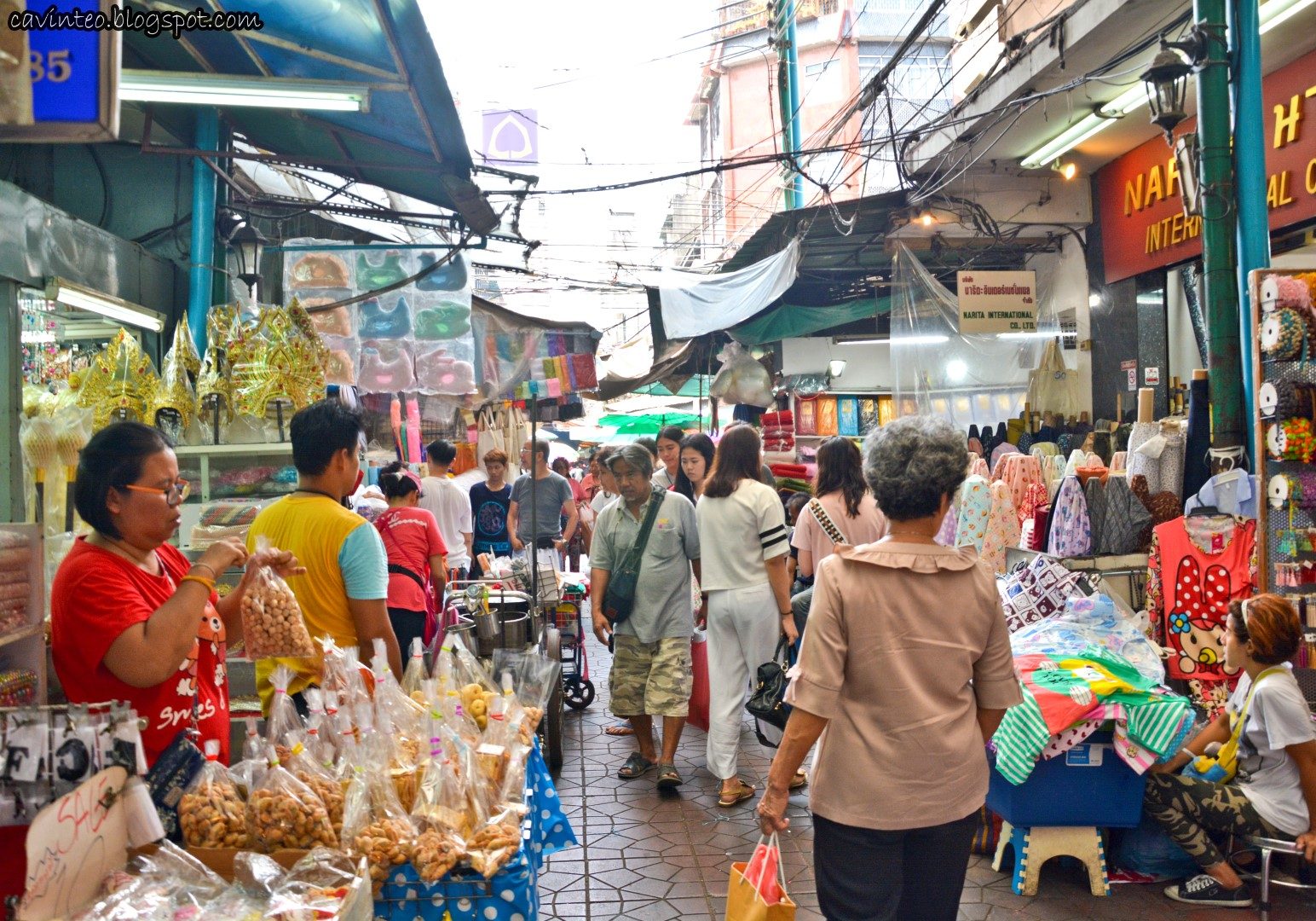
This narrow alley is the oldest wholesale market in the district. It offers a glimpse into historic local trading.
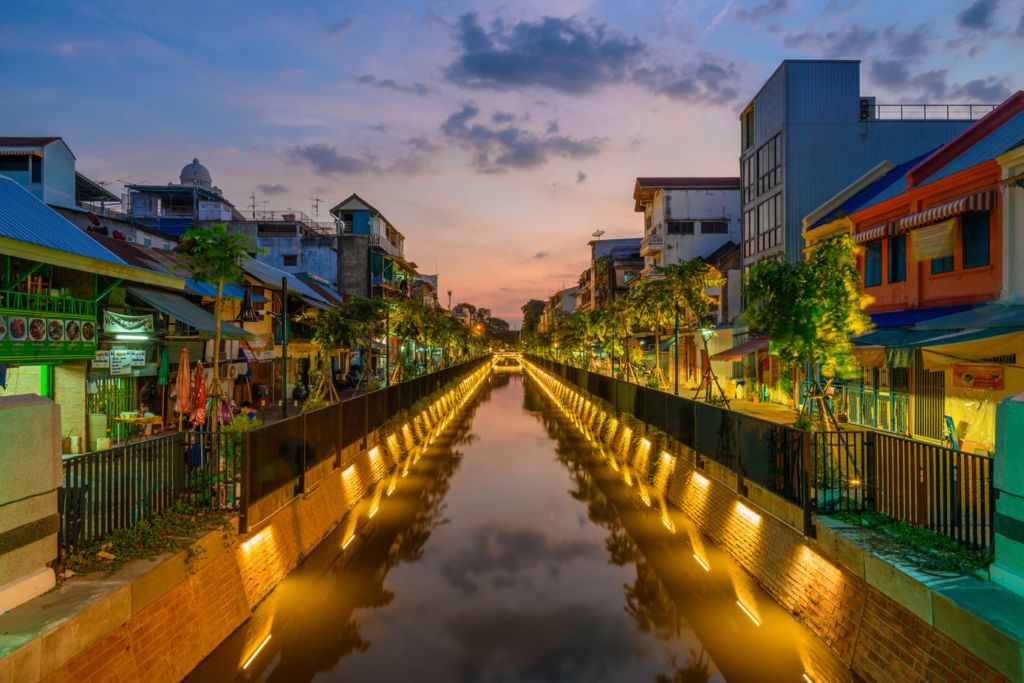
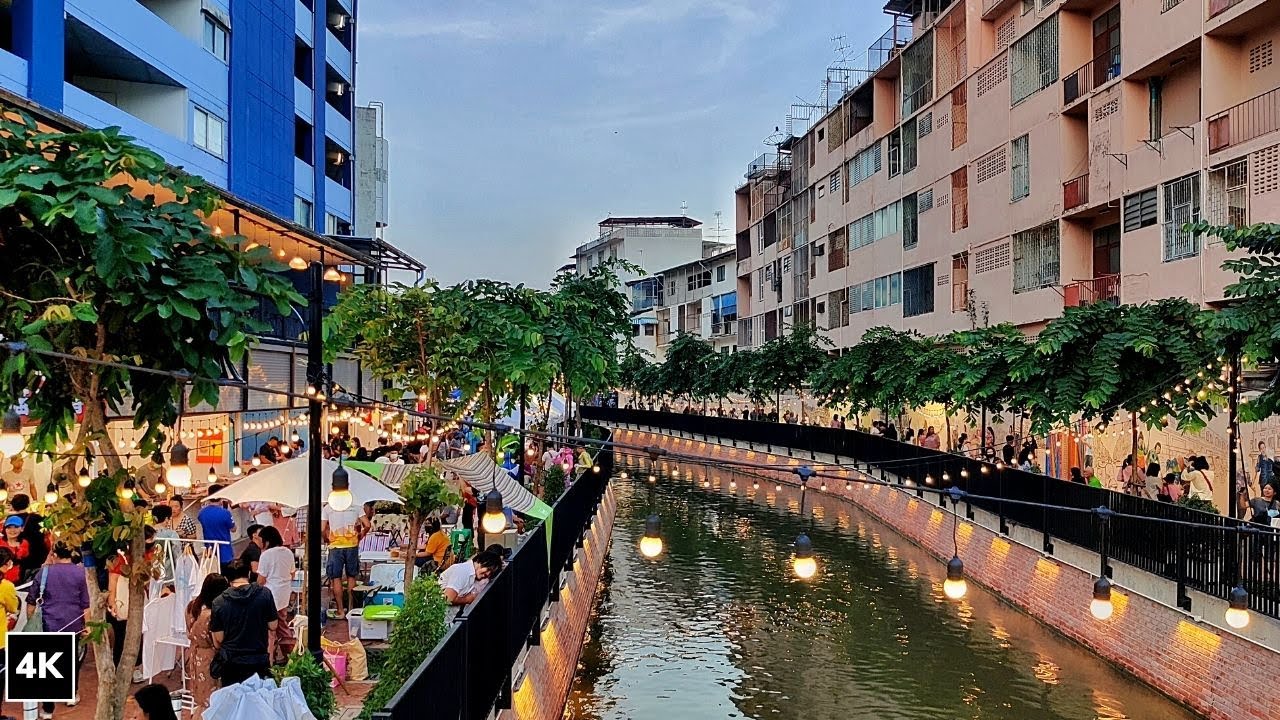
This recently restored canal area provides a tranquil space near the busy food district. It is perfect for an evening walk.
Every Bangkok Chinatown Food tour side-by-side — duration, what's included, how you redeem.
| Experience | Duration | Rating | Skip-the-line | Guide | Small group | Free cancel. | Price | |
|---|---|---|---|---|---|---|---|---|
|
Guided Experience Most popular
Chinatown Street Food Walking Tour
|
3 hr | ★ 4.9 | ✓ | ✓ | ✓ | ✓ | €21 | Book → |
|
Premium Combo
Chinatown Backstreets Food Tour with 15+ Tastings
|
4 hr | ★ 4.9 | — | ✓ | ✓ | ✓ | €54 | Book → |
|
Standard Entry
Midnight Food Tour by Tuk-Tuk
|
4 hr | ★ 4.9 | — | ✓ | ✓ | ✓ | €65 | Book → |
All prices from verified partners. Availability and exact terms confirmed at checkout.
Guided options offer deep historical context, while a Yaowarat self-guided path provides superior autonomy for budget-conscious travelers seeking an authentic bangkok chinatown food tour.
| Feature | Top pick Guided Food Tour | Self-Guided Tour |
|---|---|---|
Structure |
Pre-planned itinerary | Independent roaming |
Cultural Insight |
Expert-led narratives | Observation only |
Cost |
Fixed per-person fee | Variable individual spending |
Flexibility |
Scheduled and set | Fully customizable timing |
Group Size |
Fixed small groups | Solo or private party |
Navigation Effort |
Minimal guide support | Personal map reliance |
| See tickets → |
Verdict: Most visitors who seek a bangkok chinatown food tour tours package value the storytelling, though those comparing bangkok chinatown food tour tickets often prefer the freedom of self-guided bangkok chinatown food tour tour experiences.
Choose your ticket, select your date, and reserve in under two minutes. Secure checkout handled by our verified partner.
Instant confirmation by email, with a mobile voucher you can save offline. No printing, no queuing at a collection desk.
Arrive at the entrance, show your voucher on your phone, and walk in. Most tickets include priority or skip-the-line access.
Practical details for Bangkok Chinatown Food tickets straight from our verified partners — hours, access, rules, and how to get there.
Charoen Krung Road
Gold Buddha temple entrance
Open in Google MapsTake the MRT Blue Line to Wat Mangkon Station.
Request drop-off at the entrance of Yaowarat Road.
Casual and breathable clothing is recommended for a bangkok chinatown food tour. Comfortable footwear is essential as you will navigate busy sidewalks on foot.
Keep belongings secure in crowded zones. Avoid carrying large bags that might obstruct movement in narrow corridors during your bangkok chinatown food tour.
Street photography is generally welcomed during any bangkok chinatown food tour. Be respectful of stall owners and patrons when capturing images.
The area consists of uneven sidewalks and dense crowds, which may be challenging for wheelchair users. A bangkok chinatown food tour involves significant time spent standing.
Maintain awareness of your surroundings while using your phone. Distracted walking is hazardous given the density of the bangkok chinatown food tour route.
The vibrant atmosphere can be overwhelming for young children. Parents should supervise closely during a bangkok chinatown food tour due to proximity to traffic.
This location is the primary hub for a bangkok chinatown food tour experience. Carry bottled water to stay hydrated while sampling various dishes.
Pets are not suitable for the high-heat and crowded conditions found on Yaowarat Road. Leave animals in climate-controlled accommodation.
As of 2026, air quality can vary during the summer. Plan your bangkok chinatown food tour accordingly if sensitive to smoke or humidity.
Best time to go, insider tips, nearby landmarks, and the cancellation fine print — flip through to skim what matters to you.
How crowds, weather, and events shift across the year.
High heat and humidity characterize August visits. Arriving between 18:30–22:00 provides an optimal balance of stall availability and manageable crowd density.
Cooler temperatures make this the most comfortable season for a bangkok chinatown food tour. Expect significantly larger evening crowds.
Dry weather supports consistent street food operations. Minimal rain disruptions allow for a seamless bangkok chinatown food tour journey.
Moderate crowds and stable weather offer a balanced experience. These months provide the best pace for a typical bangkok chinatown food tour.
Small details that turn a good visit into a great one.
Bring small denominations of THB for easy food transactions. Many vendors do not accept large notes or credit cards.
Keep bottled water with you at all times. The high-heat environment makes hydration essential for a bangkok chinatown food tour.
Use the MRT Blue Line to avoid heavy traffic congestion. This is the fastest way to reach your bangkok chinatown food tour.
Arrive within the 18:30–22:00 window for the best food variety. Arriving later may result in limited stall options.
Select stalls with high turnover and visible food preparation. This is a standard practice for a successful bangkok chinatown food tour.
Download an offline map of the district before arriving. Signal strength can fluctuate among narrow alleyways.
Non-bookable sights within a short walk — free to visit, easy to pair.
Famous for housing the world's largest solid gold Buddha statue.
A narrow market alley known for wholesale goods and heritage.
The site of the iconic Chinese ceremonial gate.
A revitalized canal area popular for evening strolls.
Flexible, no hidden fees.
Individual food purchases follow vendor-specific policies. Tours booked through third-party operators typically require 24-hour notice for refunds.
Hand-picked options within walking distance — pick a district for vibe, or a specific hotel for convenience.
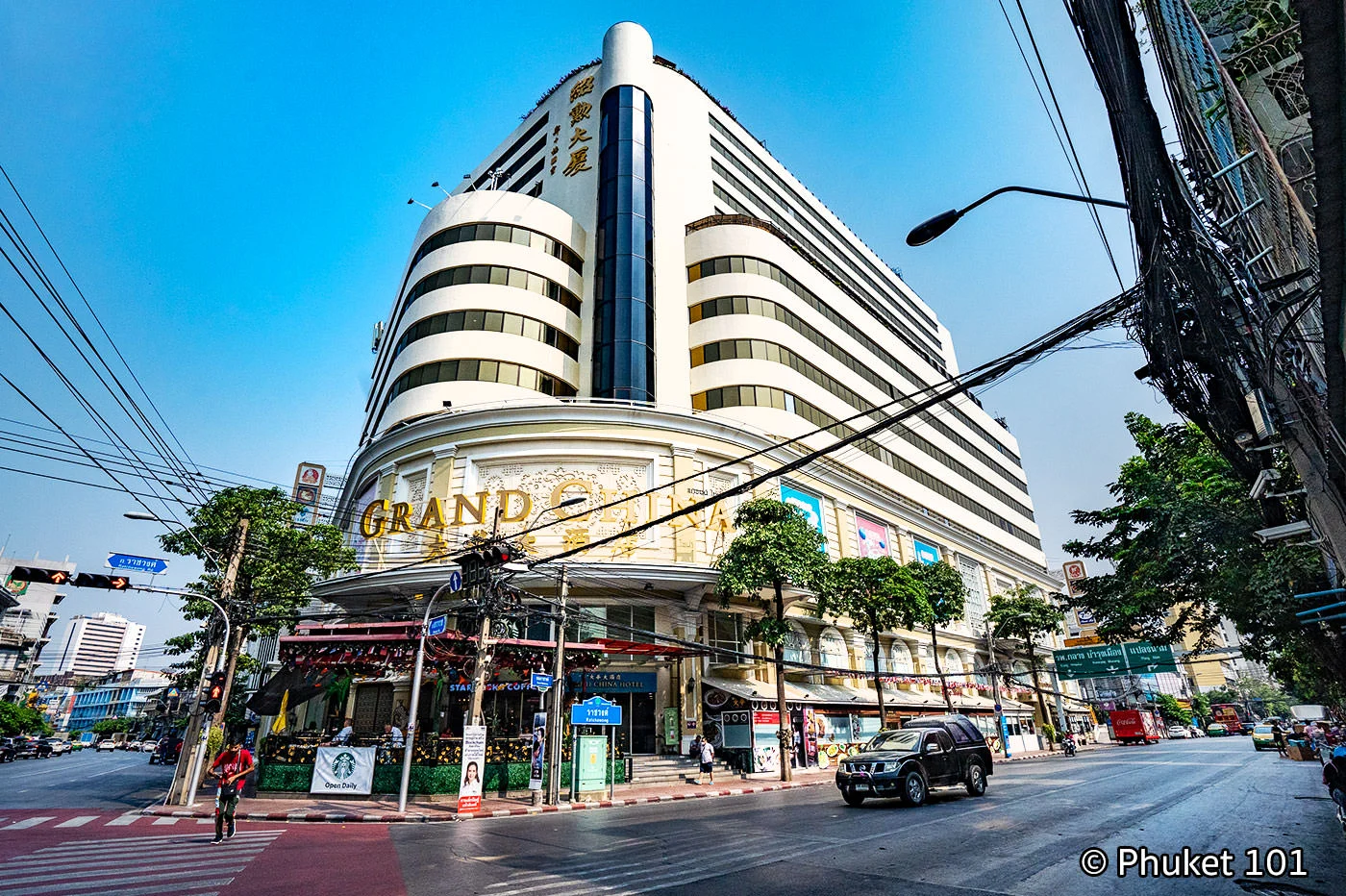
Located directly on the main thoroughfare.
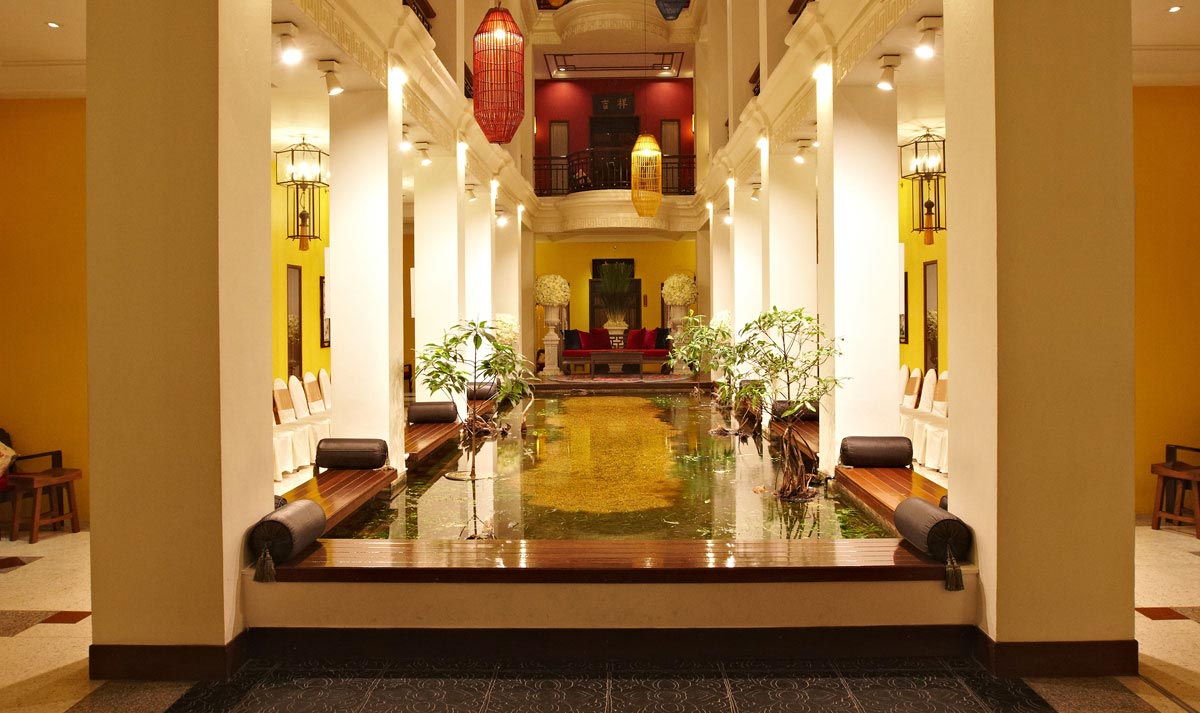
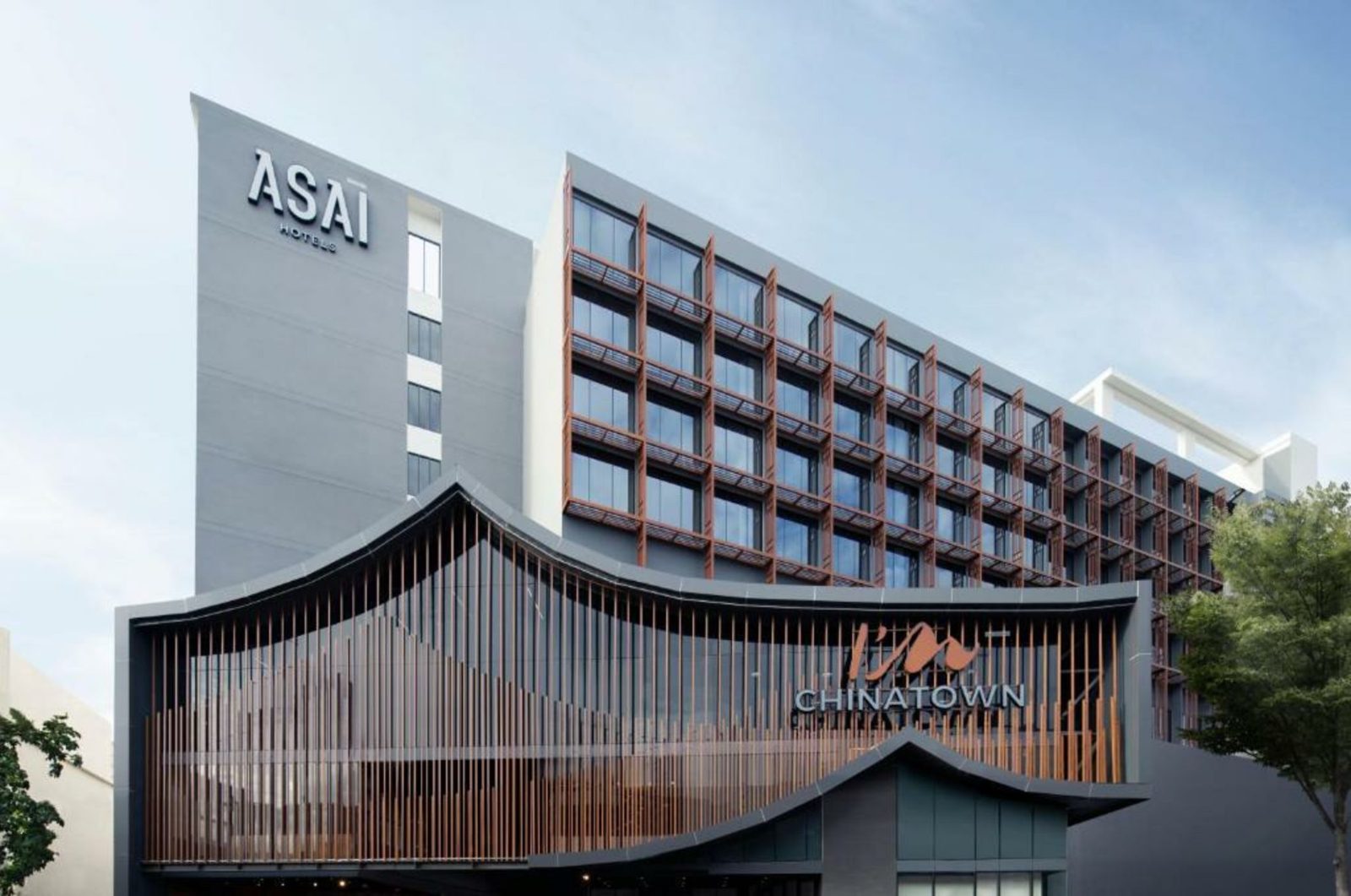
Themed heritage hotel in the heart of the district.
Various options available within the Samphanthawong district.
Yaowarat Road opened in 1891 to mark King Rama V's golden jubilee, and within a decade Chinese merchants had transformed the thoroughfare into Southeast Asia's densest constellation of shophouses, tea traders, and gold exchanges.
By the 1920s the street fed a quarter-million residents nightly, its charcoal braziers flickering until dawn. Today that culinary lineage remains unbroken—third- and fourth-generation vendors still work the same corner plots their ancestors claimed a century ago, and the aroma of caramelising pork fat and tamarind paste drifts uninterrupted from dusk to midnight.
A Bangkok Chinatown food tour reveals a district that never paused for modernisation. Michelin-starred pushcarts park beside family-run noodle shops that have occupied the same three square metres since 1947. The street operates on a twilight economy: steel shutters lift at half-past five, and by seven the pavements vanish beneath plastic stools, stockpots, and queue barriers. Vendors speak Teochew and Thai in equal measure, and menus remain untranslated—a deliberate filter that has kept the cuisine rooted in regional dialect rather than tourist expectation. The best Bangkok Chinatown food tour operators employ guides who grew up within a five-block radius and can parse the difference between a Hokkien char kuay teow and a Cantonese-style wonton mee by scent alone.
Yaowarat's culinary reputation rests on its refusal to standardise. A Bangkok Chinatown night food tour might include eighteen separate tastings across a two-hour window, each vendor specialising in a single dish perfected over decades. One stall serves only crab omelette, another only braised duck neck, a third only shaved ice dressed with palm sugar and coconut cream. The district earned its first Michelin Bib Gourmand in 2018, and by 2023 seven Yaowarat vendors held the designation—all of them sub-100-baht operations with no seating. The Bangkok Chinatown walking food tour format emerged organically from this density: the quarter-mile stretch between Odeon Circle and Yaowarat Soi 11 contains forty-seven documented food vendors, and walking remains the only viable way to cover that range before the char siu runs out.
The neighbourhood remains stubbornly analog. Cash-only transactions dominate, and many stalls refuse delivery aggregators to preserve in-person queuing culture. Evening foot traffic peaks between half-past six and ten, when office workers from Silom and university students from Thammasat converge on the same twelve legendary vendors. The queue at Nai Ek roll noodles routinely stretches thirty deep by eight o'clock, and the line moves in five-minute increments—a cadence that has not changed since 1981. This rhythm defines the Yaowarat experience: patient, sequential, and governed entirely by the speed at which a single wok can sear rice noodles over open flame.
"Vendors speak Teochew and Thai in equal measure, and menus remain untranslated—a deliberate filter that has kept the cuisine rooted in regional dialect rather than tourist expectation."
A step-by-step walkthrough of Bangkok Chinatown Food tickets — what you'll see, how long each stage takes, and the details that matter.
You arrive at Odeon Circle as the shutters begin to rise, the sky still pale above the shophouse rooflines. Your guide—a third-generation Yaowarat resident—leads you past the gold shops and into a narrow soi where the first charcoal fires are already glowing.
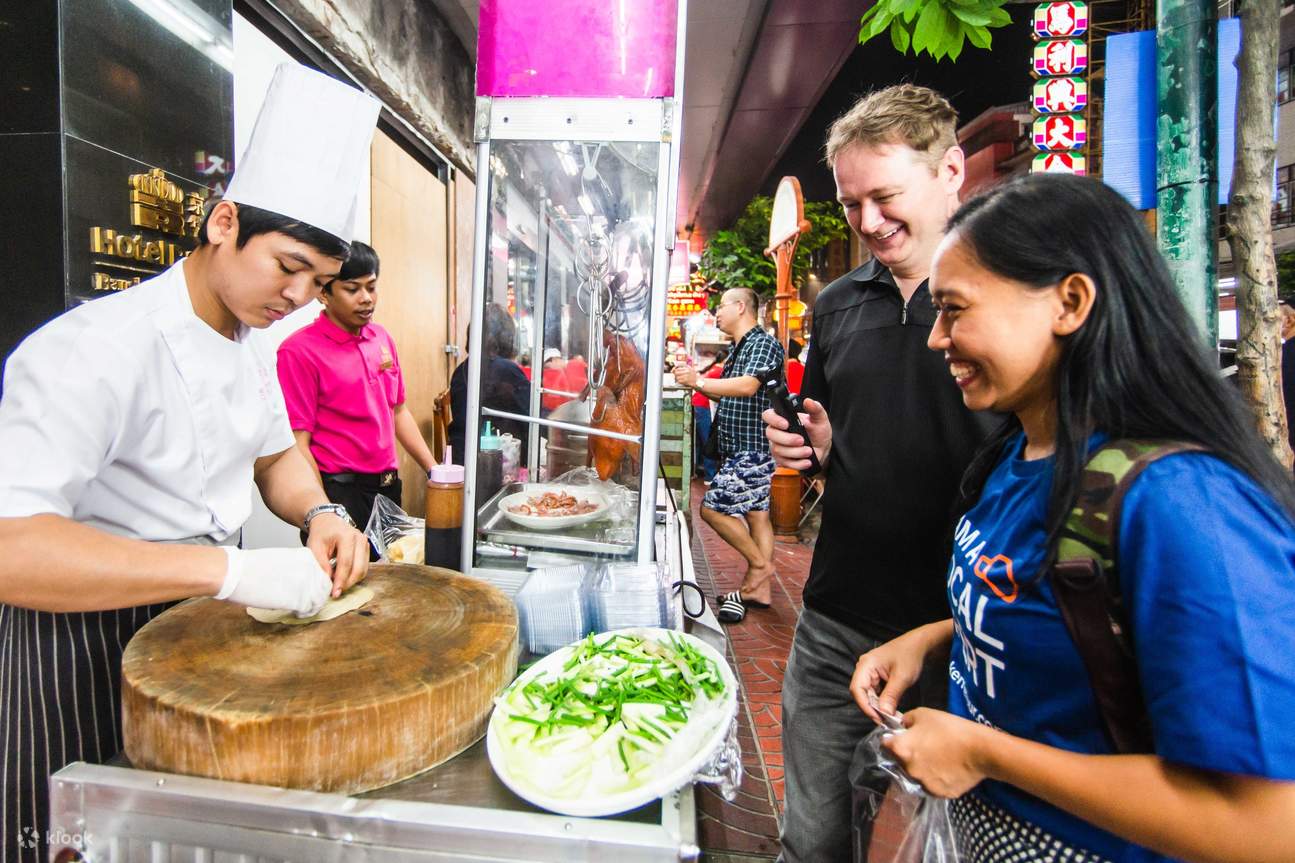
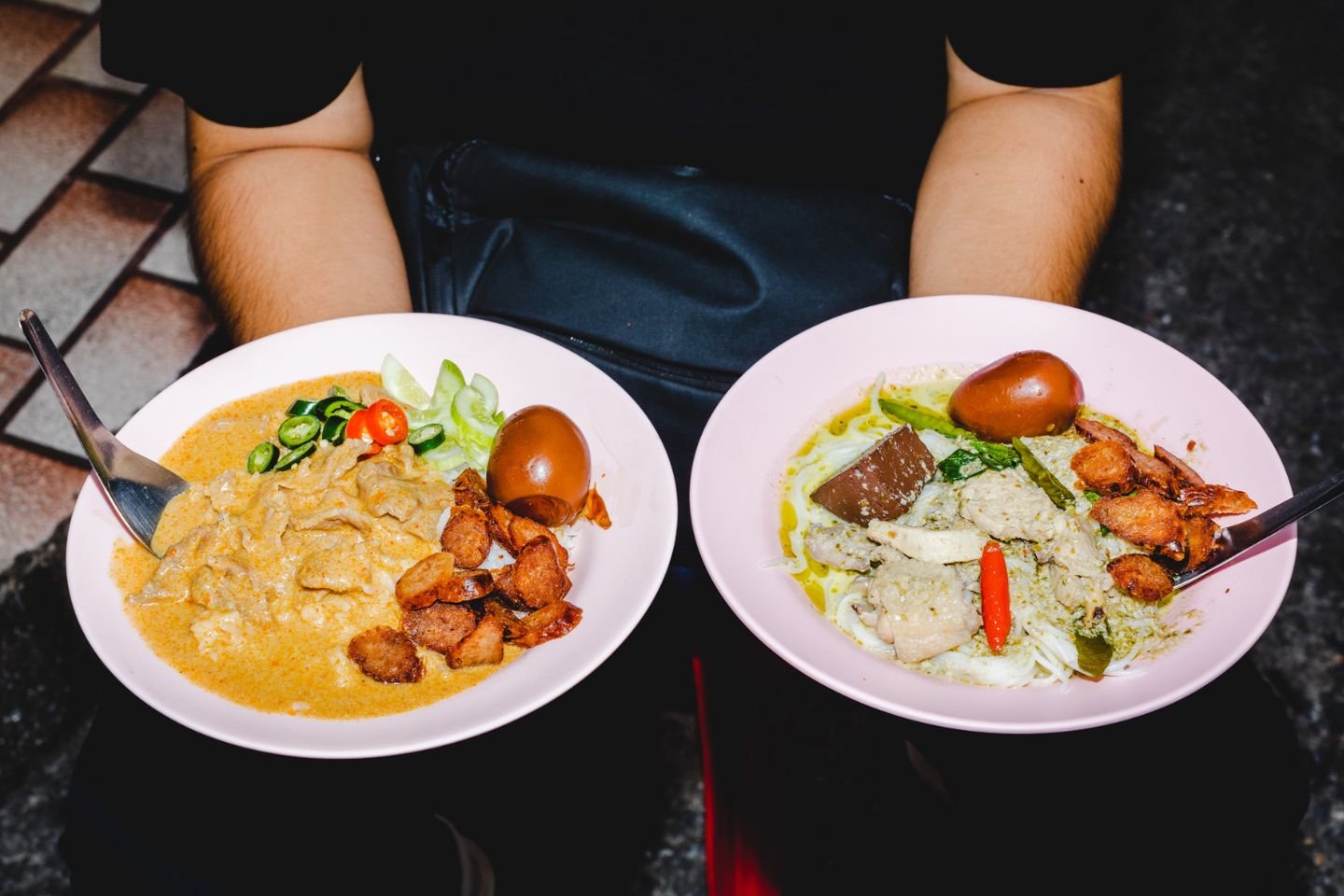
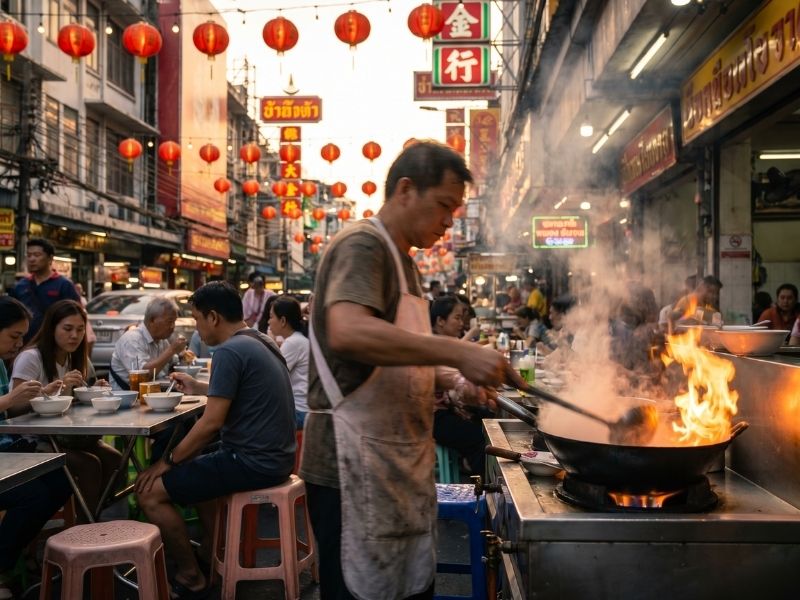
You pause at a cart no wider than a motorcycle, where a woman in a floral apron ladles broth over rice noodles she rolled by hand that morning. The bowl is set before you on a plastic stool, and you eat standing, the way every diner here has eaten since 1960.
You cross Yaowarat Road twice in the next twenty minutes, weaving between tuk-tuks and produce carts, stopping at a Michelin-starred pushcart for crab omelette fried in a wok the size of a car tyre. The vendor works without a timer, flipping the egg by wrist angle alone. Three blocks east you try braised pork belly at a stall that has occupied the same kerb since 1952, the meat lacquered dark with soy and star anise, served over jasmine rice in a styrofoam clamshell.
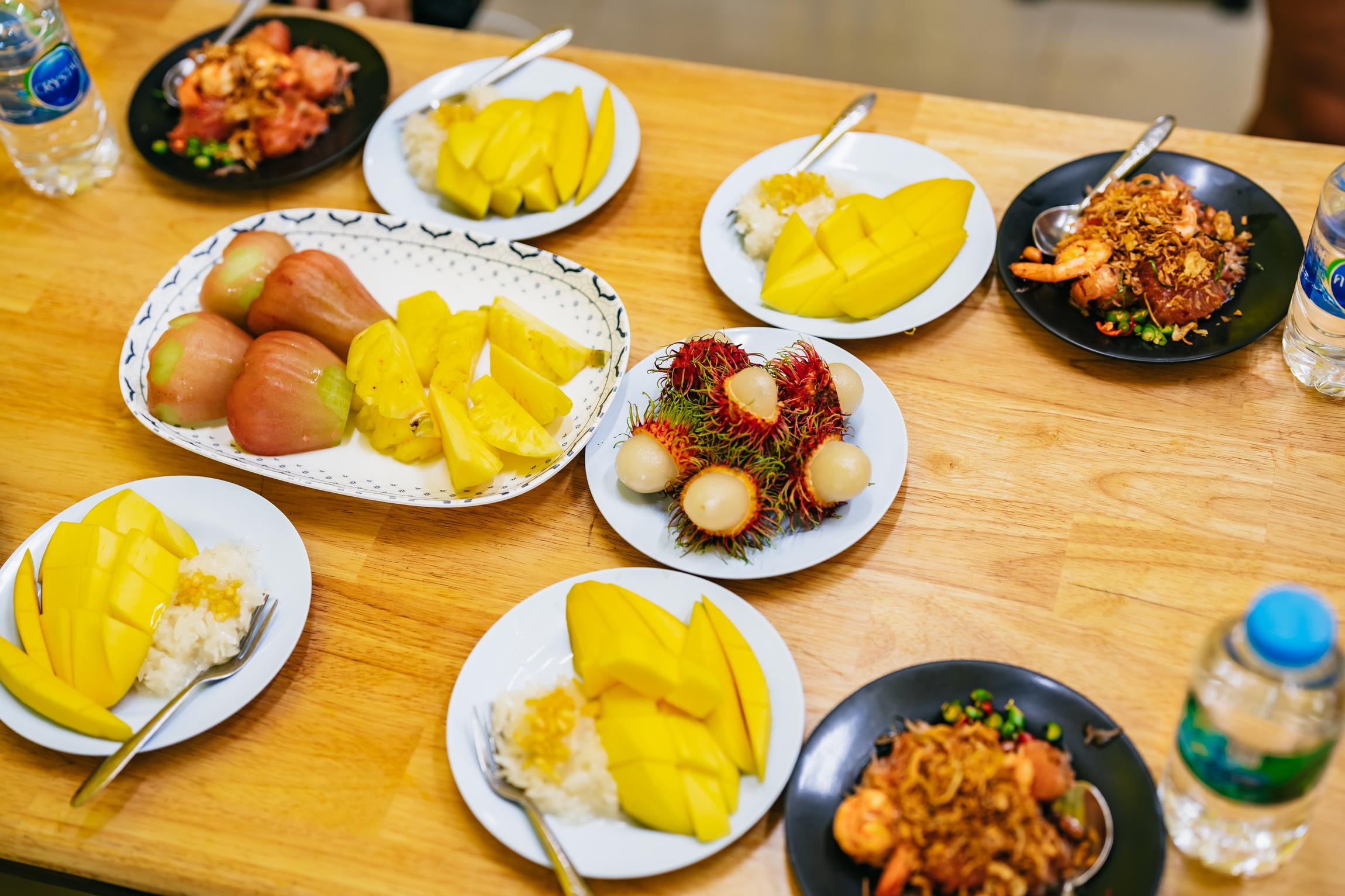
By half-past eight the pavements have disappeared beneath a grid of tables and stools, and your guide navigates you through the crush toward a dessert vendor whose shaved ice is dressed with palm sugar syrup and coconut cream. You finish the tour beneath the neon glow of a corner pharmacy, your hands scented with chilli oil and fried garlic, the queue for the next stall already forming behind you.
The district operates from 17:30–00:00 Tuesday through Sunday, with Monday closures. Individual stalls for your bangkok chinatown food tour may have their own schedules.
The entrance fee is 0 THB as this is a public street. You only pay for the food items you consume during your bangkok chinatown food tour.
The best arrival window is 18:30–22:00 for an optimal balance of full stall availability and manageable crowd density. This ensures you experience the best of your bangkok chinatown food tour.
The area has uneven sidewalks and dense crowds, which may be difficult for some. A bangkok chinatown food tour involves significant walking on public roads.
Large items like suitcases and professional tripods are discouraged to maintain flow on the narrow streets. Keep your gear light for the bangkok chinatown food tour.
Photography is encouraged during your visit. Please respect local vendors and other participants while filming your bangkok chinatown food tour.
Casual, comfortable clothing and walking shoes are recommended. It is hot, so dress for high temperatures during your bangkok chinatown food tour.
Use the MRT Blue Line to reach Wat Mangkon Station. This is the most efficient way to access your bangkok chinatown food tour.
Children are welcome but must be supervised closely due to traffic. The crowds during a bangkok chinatown food tour can be intense for little ones.
Cancellation policies depend on the specific tour operator. Always check your booking details for any bangkok chinatown food tour tickets.
Yes, you can easily visit nearby landmarks like Wat Traimit before starting your bangkok chinatown food tour. Many travelers combine these into an evening outing.