
English| EUR
Suggested for you
More currencies
Choose a language
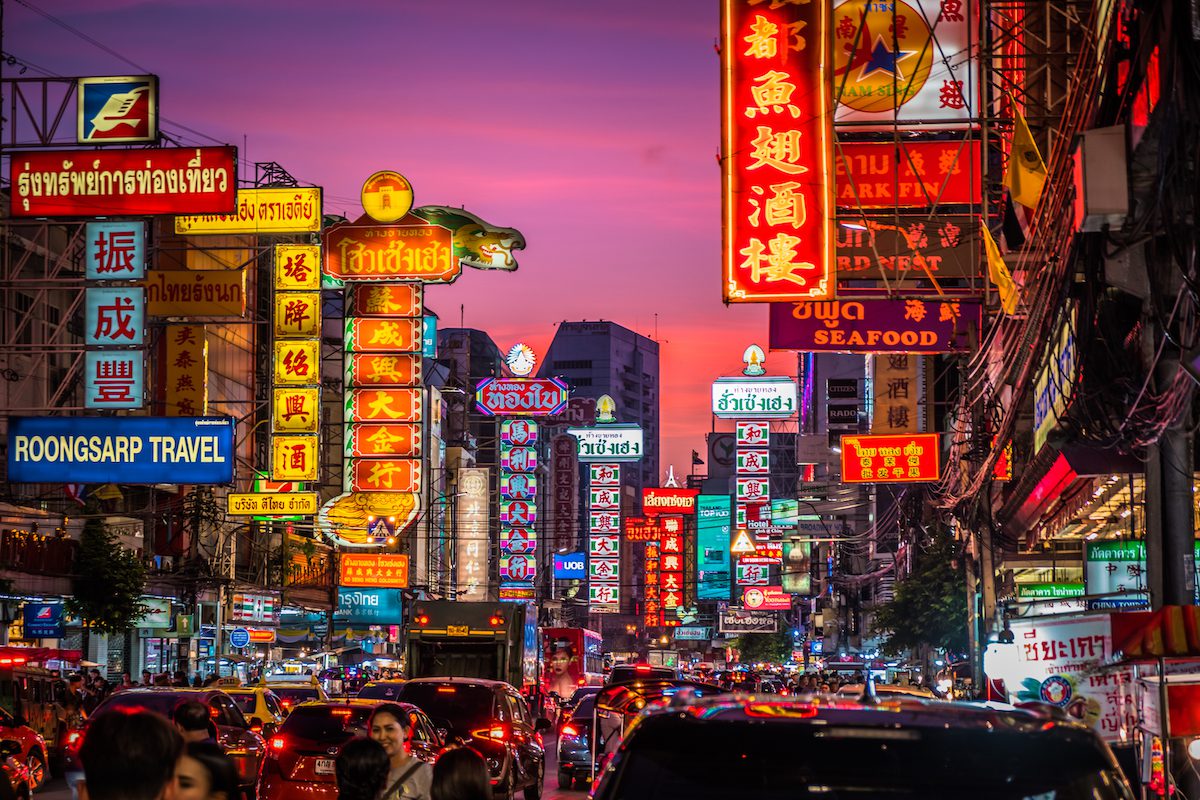
Bangkok's Chinatown operates on a rhythm dictated by vendors, not gates. The district's public streets remain open around the clock, but the energy that defines Yaowarat—the sizzling woks, the gold-shop crowds, the alley hawkers—rises and falls with the sun. Understanding when that pulse fades helps you plan a visit that captures the quarter at its liveliest.
Quick answer
Chinatown Bangkok does not have a formal closing time because Yaowarat Road and its surrounding lanes are public streets accessible 24 hours a day. The district operates on vendor schedules: street food stalls and night-market traders typically set up between 17:00 and 18:00 and begin packing down after 23:00, though a handful of late-night spots stay open past midnight. Daytime gold shops and traditional shophouses generally close by 18:00 or 19:00.
Bangkok's Chinatown stretches along Yaowarat Road without perimeter walls, turnstiles, or security sweeps that signal a hard close. The district lives on merchant time: shop shutters roll up at dawn, food carts claim their corners by late afternoon, and the last vendors wheel their rigs home when foot traffic thins past midnight. This fluidity makes the chinatown bangkok closing time less a posted hour than a gradual ebb. The daytime economy—gold traders, herbal-medicine counters, fabric wholesalers—winds down between 18:00 and 19:00 as family-run businesses lock their grilles and head home. By contrast, the night-market ecosystem awakens around 17:00 when char kway teow woks fire up and plastic stools line the pavement. Peak energy runs from 19:00 through 22:30, when tour groups, local families, and late diners pack the sidewalks. After 23:00 most stalls begin breaking down, though a core of late-night operations—congee kitchens, dim-sum counters, the occasional dessert stand—linger until 01:00 or later to serve shift workers and insomniacs. Yaowarat's layout complicates any single answer. Narrow sois radiate from the main artery, each with its own vendor mix and cadence. Soi Texas, known for its seafood grills, stays animated until midnight. Sampheng Lane, the parallel wholesale alley, quiets by early evening because its trade serves daytime retailers, not evening strollers. The temple precincts—Wat Traimit with its golden Buddha, Wat Mangkon Kamalawat—observe their own schedules, typically closing courtyard access by 18:00 or 19:00 even as the streets outside them hum. Understanding when Yaowarat slows helps you avoid the anticlimax of arriving at 23:30 to find shuttered stalls and swept pavements. It also clarifies why timing matters more here than at a gated attraction with printed hours. The district's character is inseparable from its merchant rhythms, and catching that character means syncing your visit to the hours when the quarter's vendors, not just its streets, are open for business.
“Yaowarat lives on merchant time: the district's character is inseparable from its vendor rhythms, not the gates it never had.”
Chinatown Bangkok is a public area accessible 24 hours a day, seven days a week. Please note that while the streets remain open, individual food stalls operate on their own specific schedules.
Access to the public streets and market area of Yaowarat Road is entirely open to the public. There are no entrance fees required to explore this district.
Verdict: A typical adult pays 0 THB to enter the district, as there are no admission fees for these public areas.
Yaowarat Road is located in the Samphanthawong district, accessible via public transit networks connecting across Bangkok. The most efficient approach is via the MRT Blue Line.
MRT Blue Line to Wat Mangkon Station
Chao Phraya Express Boat to Ratchawong Pier
Direct to Yaowarat Road
Exit at Wat Mangkon Station and follow signs for Yaowarat Road to enter the heart of the market district directly.
While the streets remain accessible around the clock, individual vendor schedules vary significantly based on their specific inventory and location.
Daytime market stalls primarily focus on wholesale goods and typically pack up by 17:00 as evening food vendors set up.
Most street food stalls operate independently, with the majority of popular vendors closing their stations between 23:00 and midnight.
If a popular vendor sells out of their prepared ingredients early, they will close their stall regardless of the time.
Secondary stalls located in narrow side alleys often close earlier than those on the main Yaowarat Road, usually finishing service by 21:00 or 22:00.
While the area is open, many permanent brick-and-mortar restaurants conduct deep cleaning or take their weekly day off on Mondays, leading to fewer dining options.
Motorized traffic on Yaowarat Road remains constant throughout the night, so remain observant of vehicles even after food stalls have stopped service.
Everything you need to know about chinatown bangkok closing time
The public streets and markets in this district are officially accessible 24 hours a day, so there is no specific chinatown bangkok closing time for the area itself. Individual vendors operate on their own schedules, though the peak energy is found in the evening.
Yes, the streets are open monday through sunday, 00:00–23:59. You will find that the district remains accessible throughout the entire week without scheduled shutdowns.
There is 0 THB entrance fee required to explore these public streets. Access to the vibrant market area is free for all visitors at any time of day or night.
For the most authentic experience, the best arrival window is 17:00–23:00. This is when the Yaowarat Road street food stalls are most active and the atmosphere is most vibrant.
While the streets remain open, the specific chinatown bangkok closing time for individual merchants varies based on the shop owner. Many street food stalls begin to wind down after midnight, even though the district itself is always open.
Visiting with children is safe and common during the early evening hours. We recommend visiting during the best arrival window to enjoy the culinary highlights before the crowd and chinatown bangkok closing time trends for food stalls occur.
Chinatown Night Food Tours
Read more Tickets & toursChinatown Walking Food Tours
Read more Tickets & toursChinatown Street Food Tours
Read more GuideIs Chinatown Bangkok Worth Visiting?
Read more GuideWhat to Do in Chinatown Bangkok
Read more Tickets & toursChinatown Michelin Food Tours
Read more GuideWhat to Eat in Chinatown Bangkok
Read more